 Christmas Event, First Aid Kits, and a Jeep Book
Again, the time between updates has been really long because there’s not much going on with the Jeep! Since the restoration is pretty much done and I’ve shifted to a 1940 Ford Sedan I’m restoring, the Jeep hasn’t had much work done or needed to be done. But here are a few updates from the past few months!
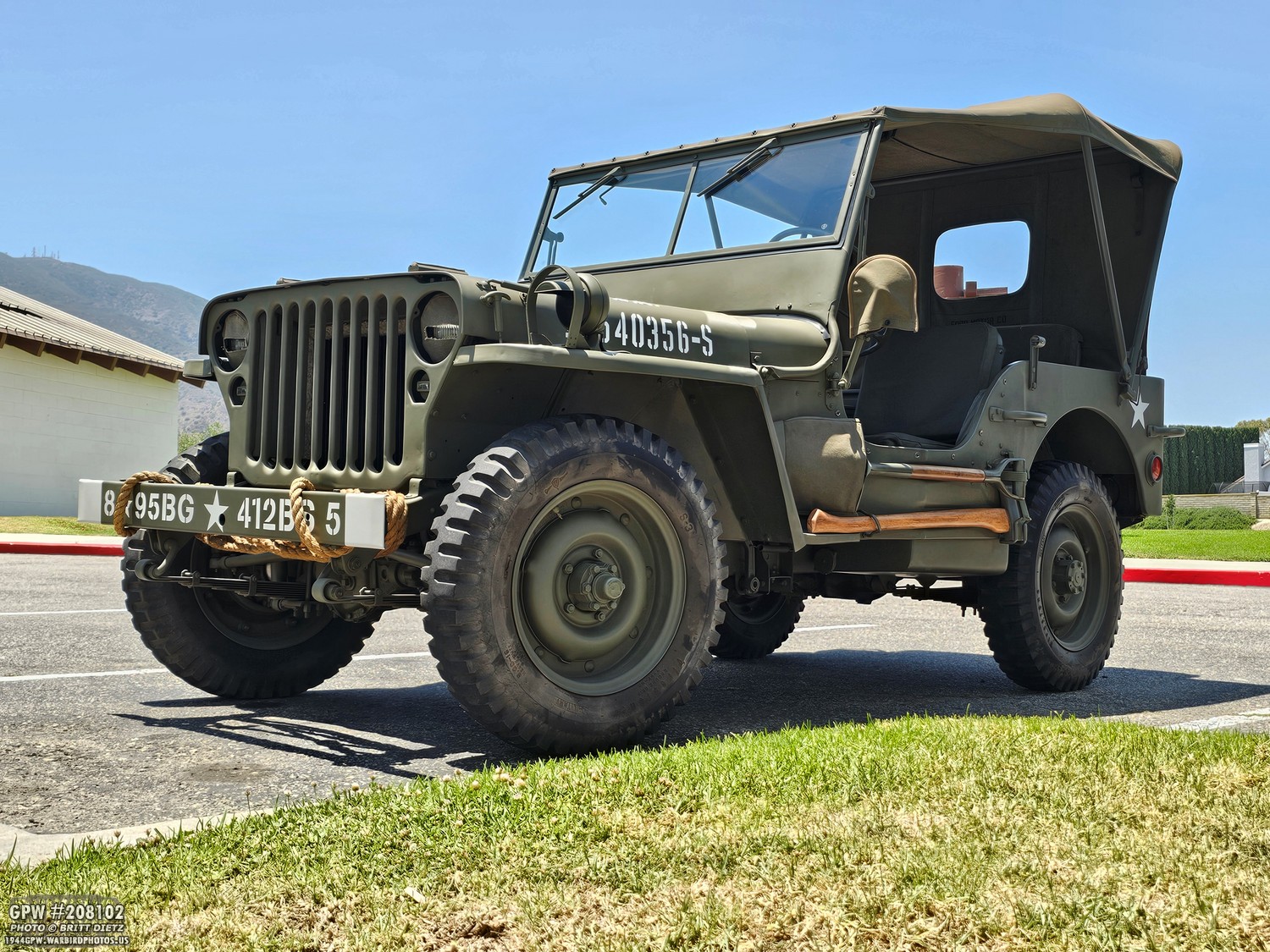
Here’s the Jeep from last June, on her 81st birthday. Even with the lack of updates, I still try to drive her once every week or every other week. It’s a good idea to keep these Jeeps active when you can, keeping the fluids flowing and the parts turning! But with my focus on restoring my 1940 Ford Deluxe Sedan (civilian vehicle), I haven’t really done much to the Jeep. However, there have been a few things that have added up to an update! So, let’s dive in.

As mentioned, I try to keep the Jeep rolling at least once a week or every other week. Just a quick drive through the neighborhood to put 2-3 miles on her keeps her in good shape. She starts up relatively quickly and has been mostly issue-free for over a year (minus the usual leaks you’ll find on a Jeep!).
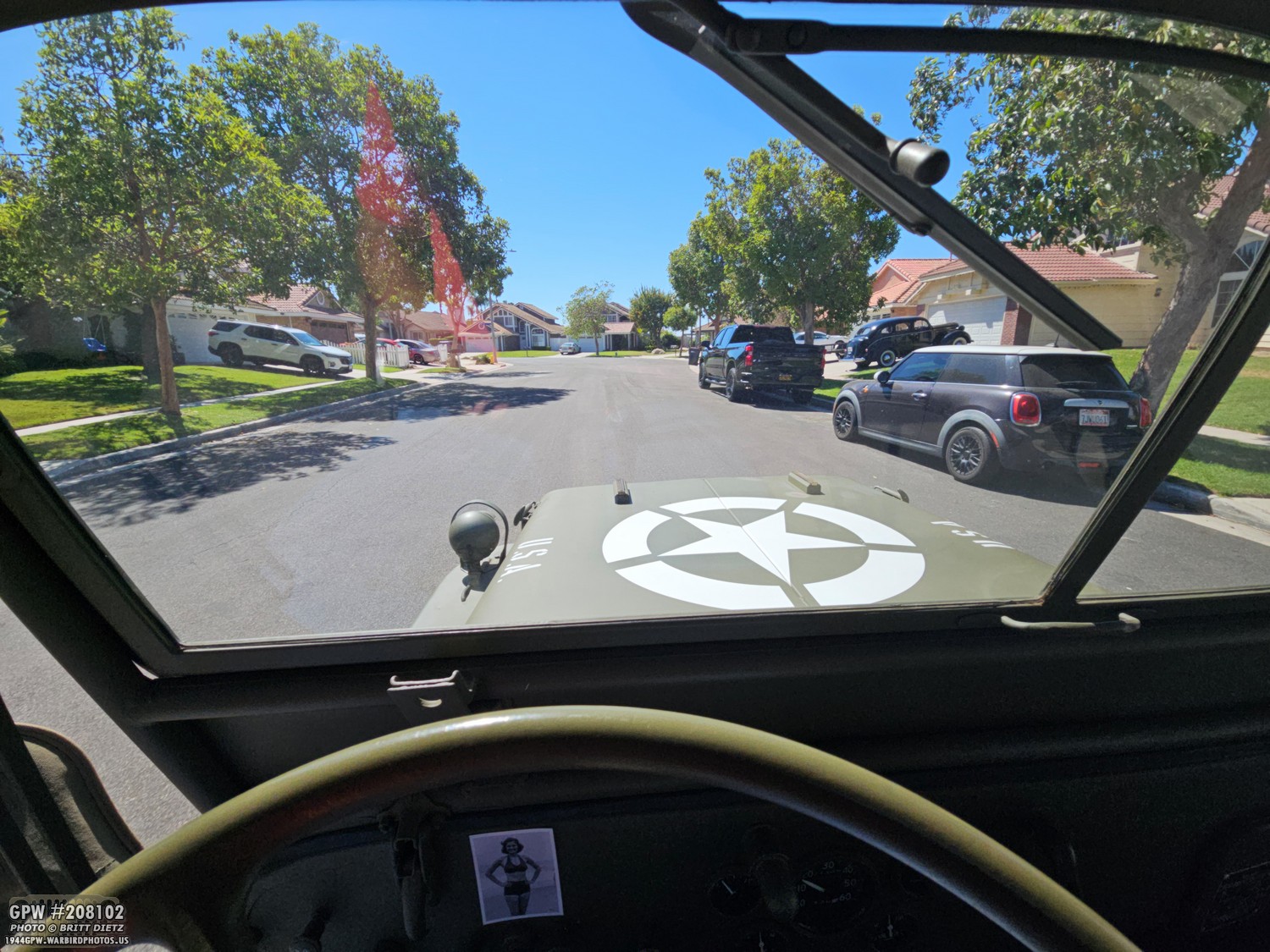
Those of you who have a finished, restored Jeep know that the work is never fully done; there’s always something that needs to be done, even if it’s unimportant and can be put off. But there’s just something about driving around and seeing that white star on the hood!
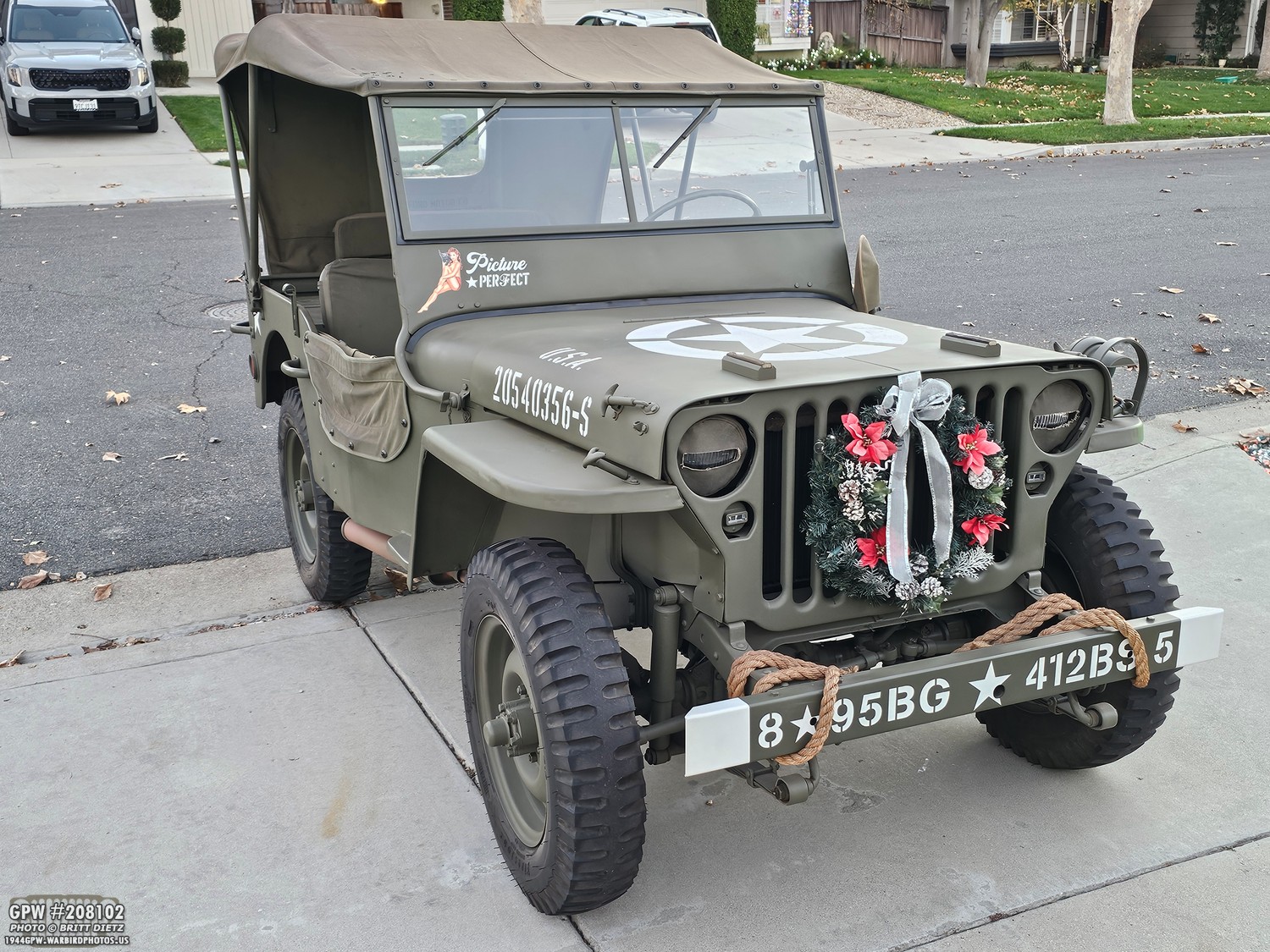
Moving along, so this winter I was asked to bring my Jeep to be part of an event out at Chino Airport. Originally, it was going to bring in Santa to the Planes of Fame Air Museum for their Junior Aviators’ Day: Holiday Edition event. Wanting the Jeep to be a bit festive, I went and attached the Christmas wreath I usually put on each year. Thought it’d give it that extra festive touch!
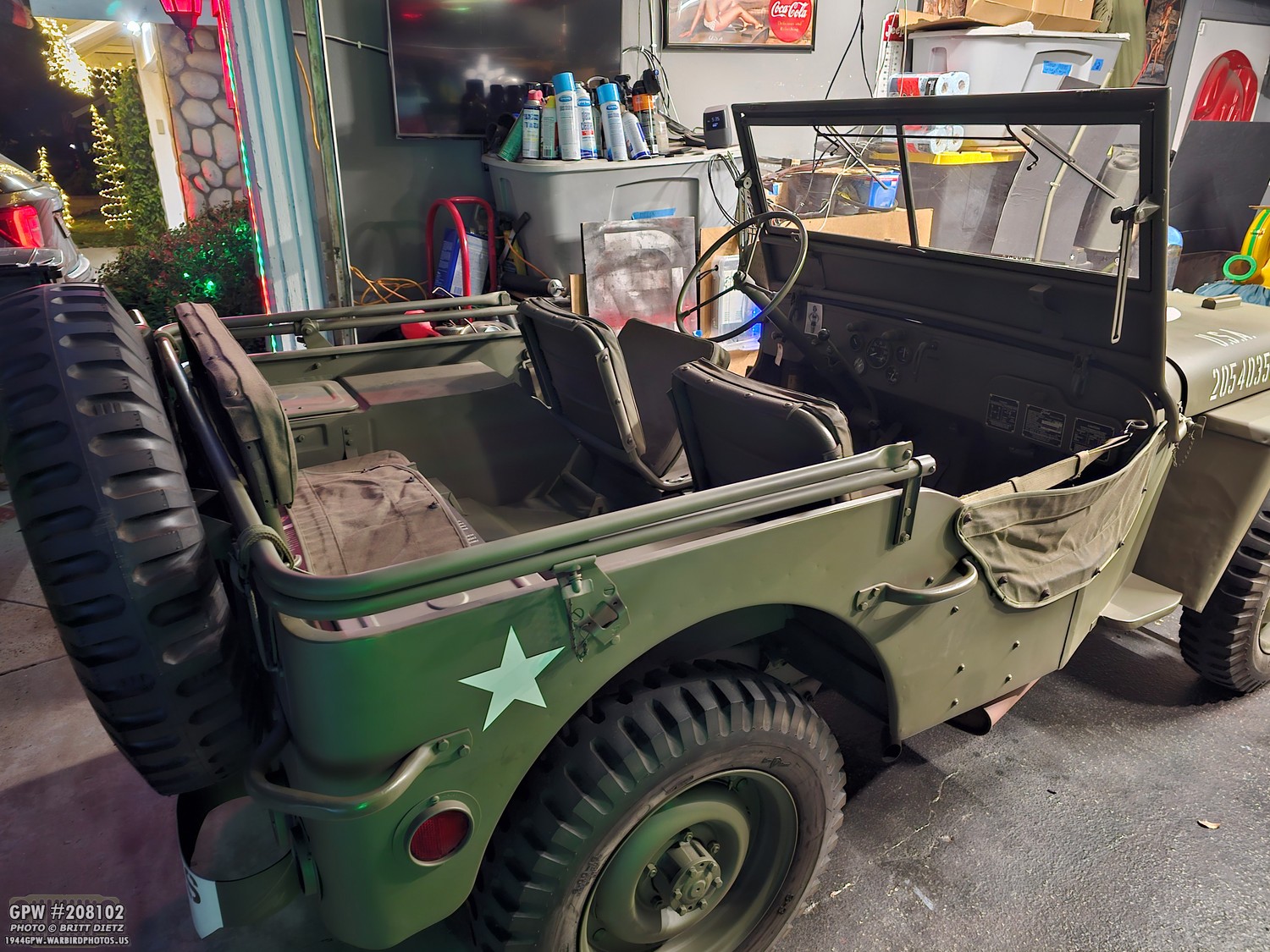
Realizing it would be easier for Santa to get in/out of the Jeep, I decided to do something that I’ve only done ONE other time since I restored the Jeep… I took the top down! I properly folded the top and put it under the passenger seat, where it is supposed to be stored.
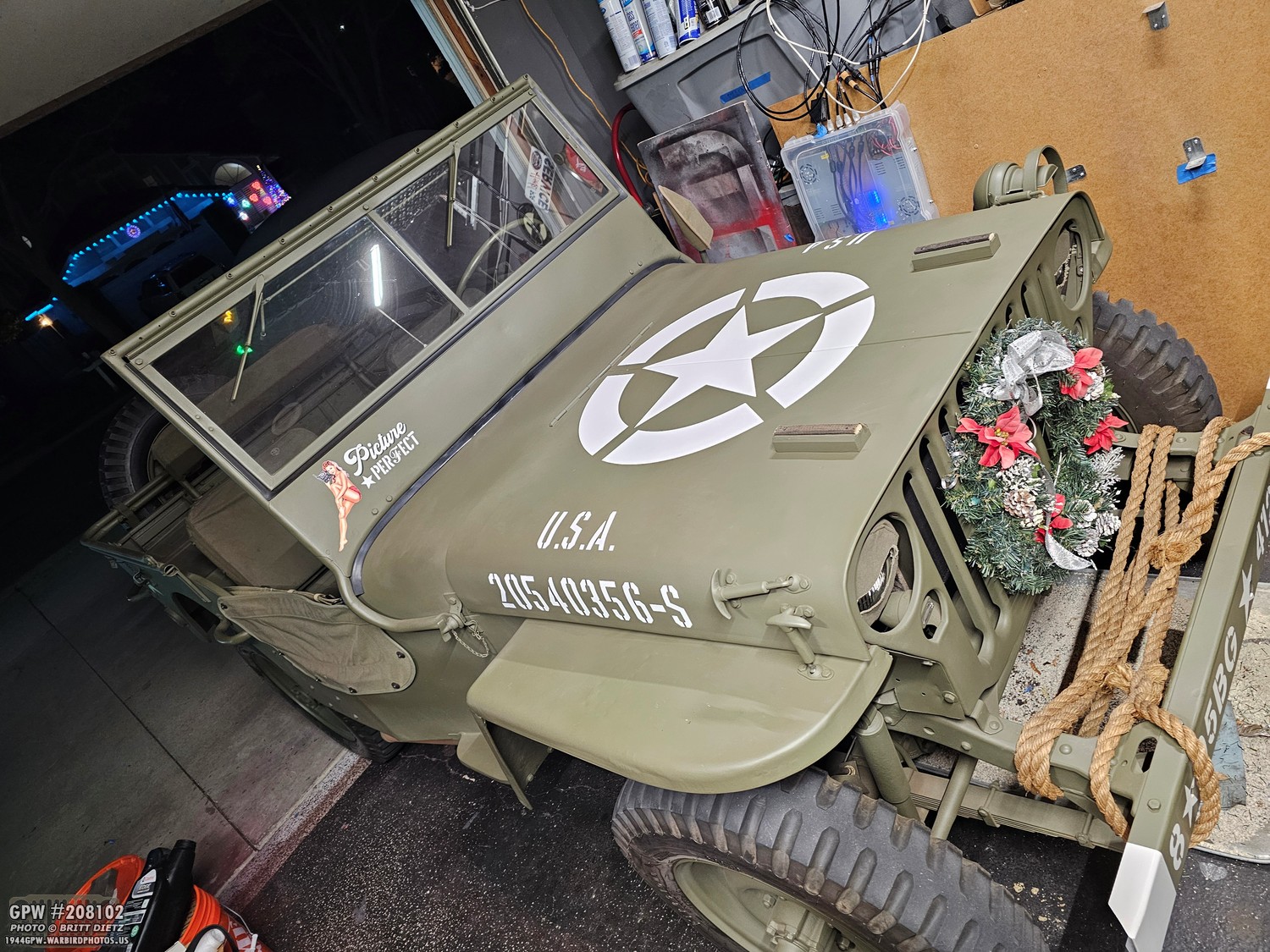
After a quick cleaning, she was show-ready! (And yes, I keep the tray of litter under the Jeep to catch any oil leaks).
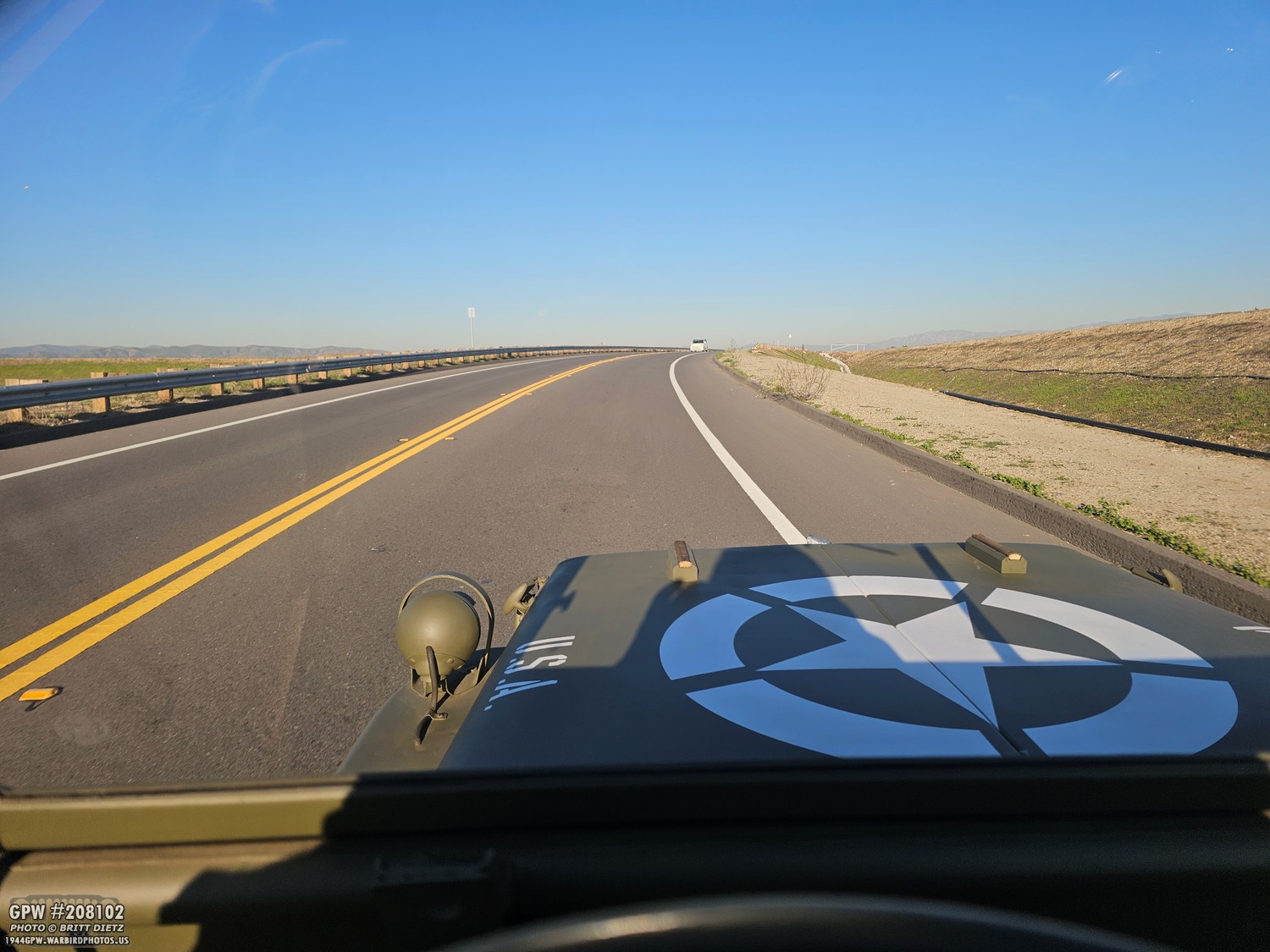
About 8am, I made the trek to Chino Airport. I like driving early in the morning in the Jeep as the roads are less packed with people going 10-20mph faster than you. It always makes me nervous when you get those impatient people who ride your bumperettes.
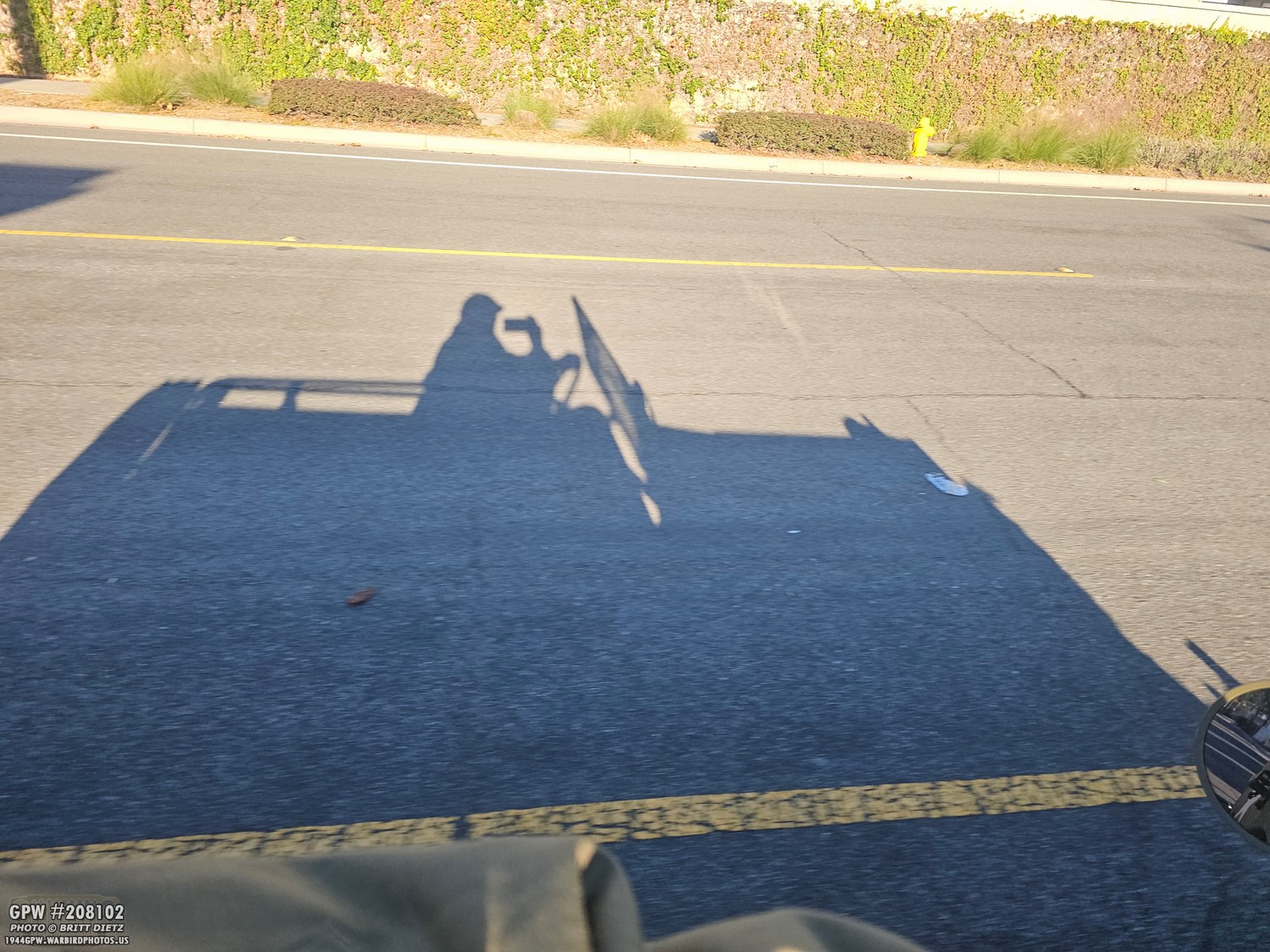
Almost to the airport (it’s about a 25 minute drive on side streets), I thought the shadow of the topless Jeep looked pretty neat on the road.
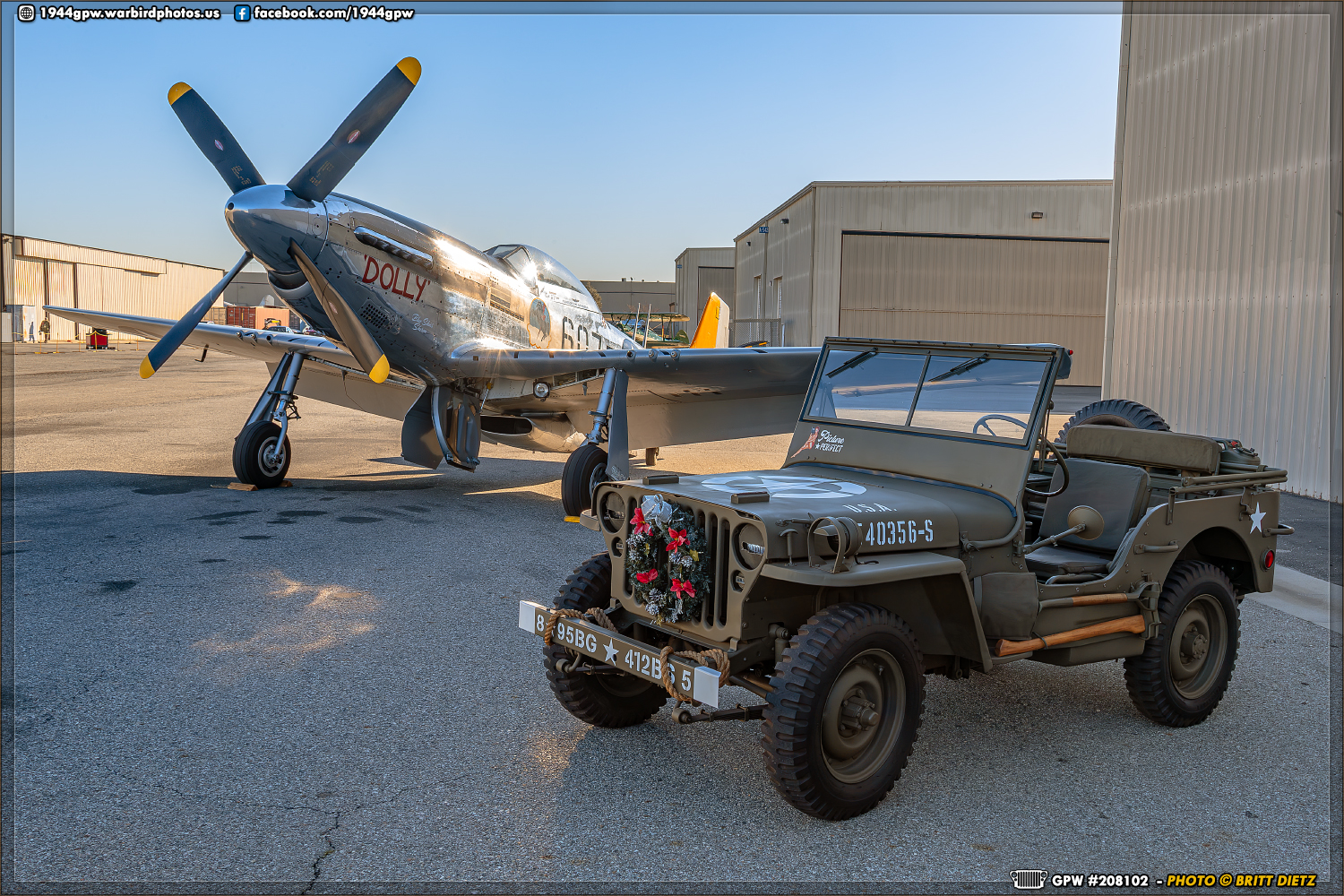
When I got there, I staged the Jeep, as I wouldn’t be driving it. I had a friend drive it as I was going to be shooting photos with Santa right after he arrived, and it would be too much work for me to run over to drive the Jeep in then run back to get the camera ready. One fun benefit was I got to stage it next to a North American P-51D Mustang! I’ve photographed my Jeep with this Mustang several times, but it’s always nice to get a shot!
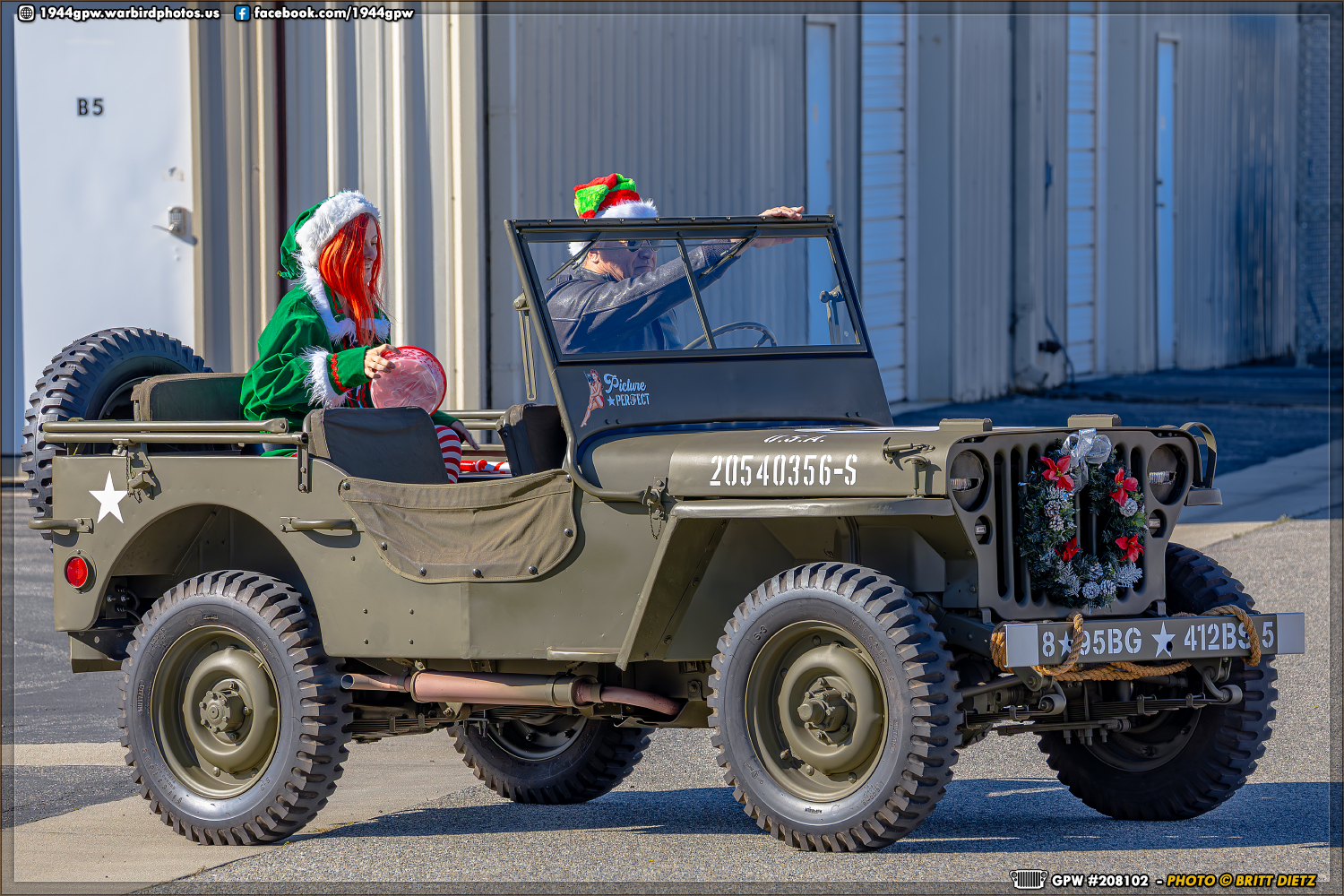
I was able to get a few shots of my Jeep being driven in. Last second, it was decided that an elf would be driven in that would be entertaining the crowd as they waited for Santa, who would be flown and taxied in aboard a 1940’s Boeing Stearman biplane.
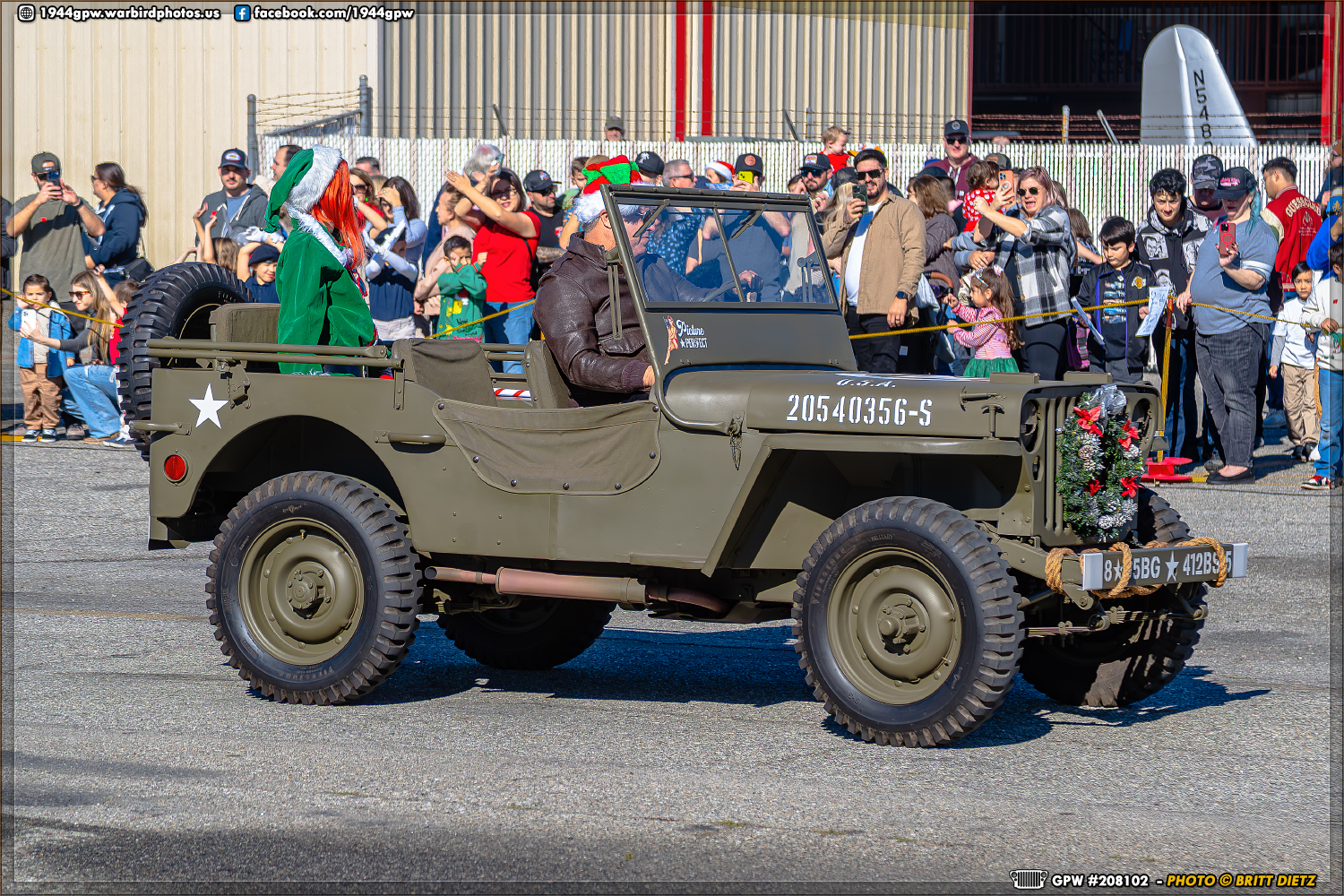
Here’s fellow Jeep owner Tom driving my Jeep and dropping off the elf.
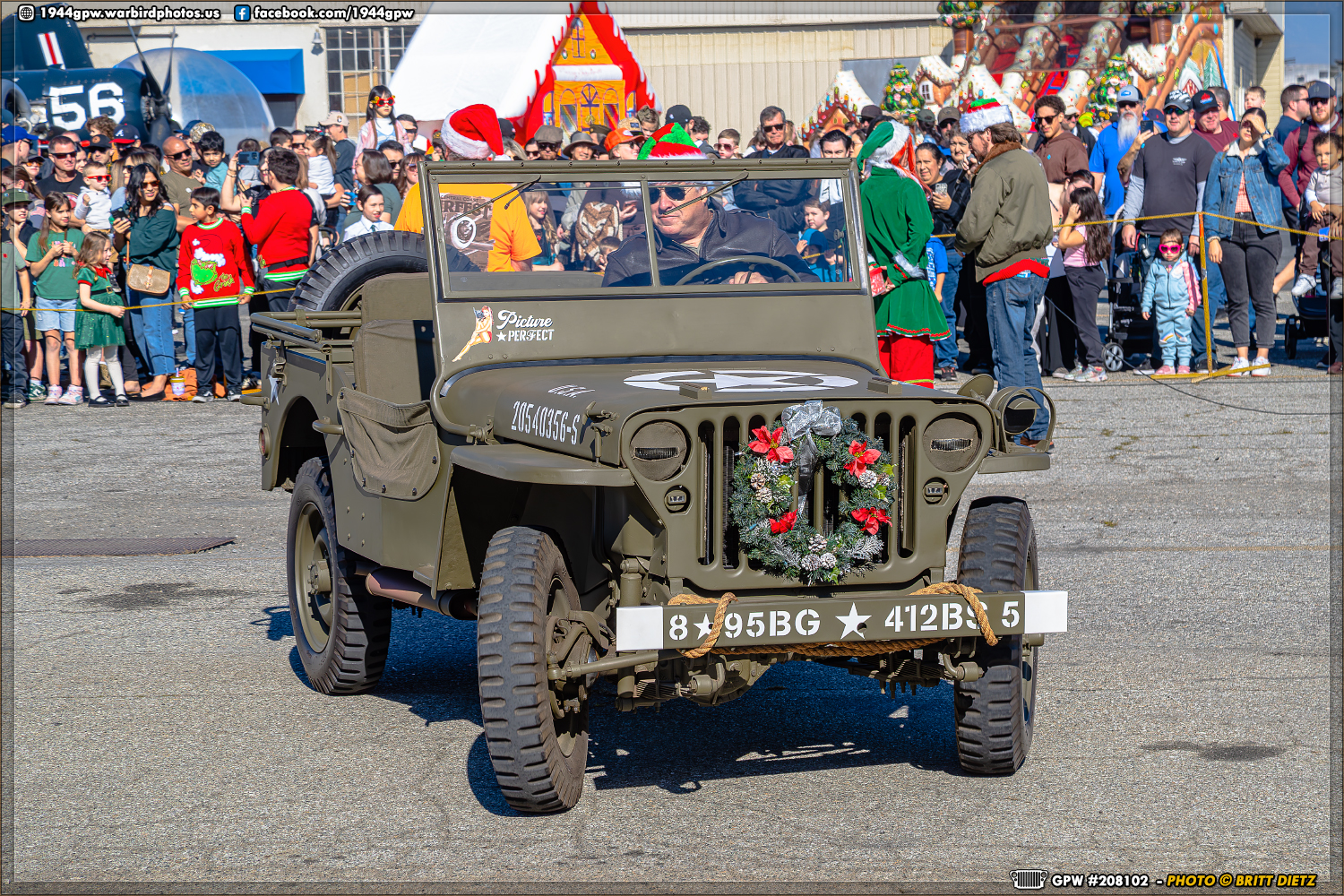
After dropping off the elf, the Jeep was then moved back to the staging area. Just a quick in and out, but still nice to have my Jeep a part of the event!
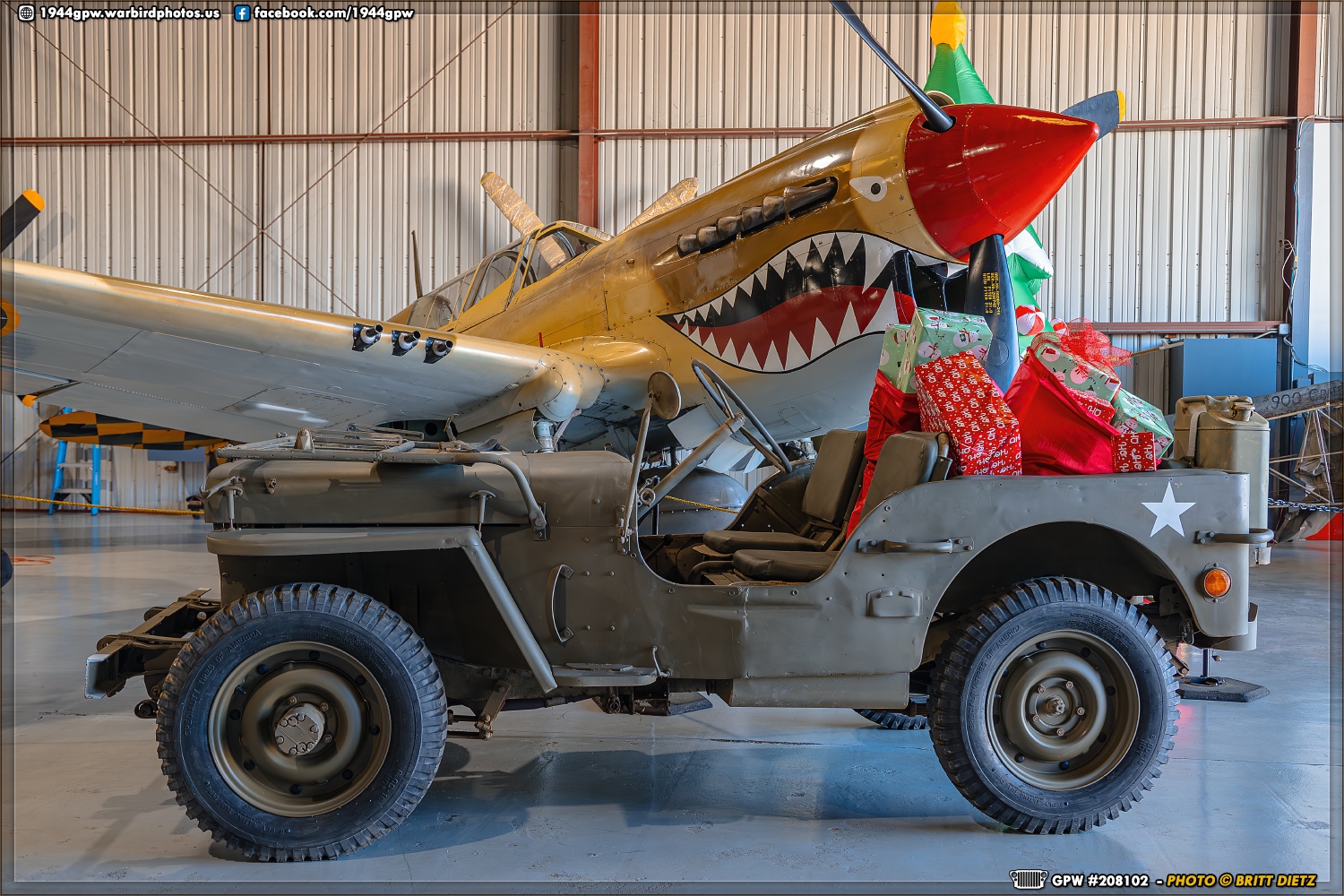
This is NOT my Jeep, but it’s the museum’s 1943 GPW Jeep. I’ve been helping them to slowly take off all the incorrect items and put missing items on as time and budget allow. Their recent addition I helped them with was purchasing combat rims and correct NDT tires. They put this Jeep in front of the P-40 Warhawk for a nice photo location for adults and kids to climb on and get their photo taken.
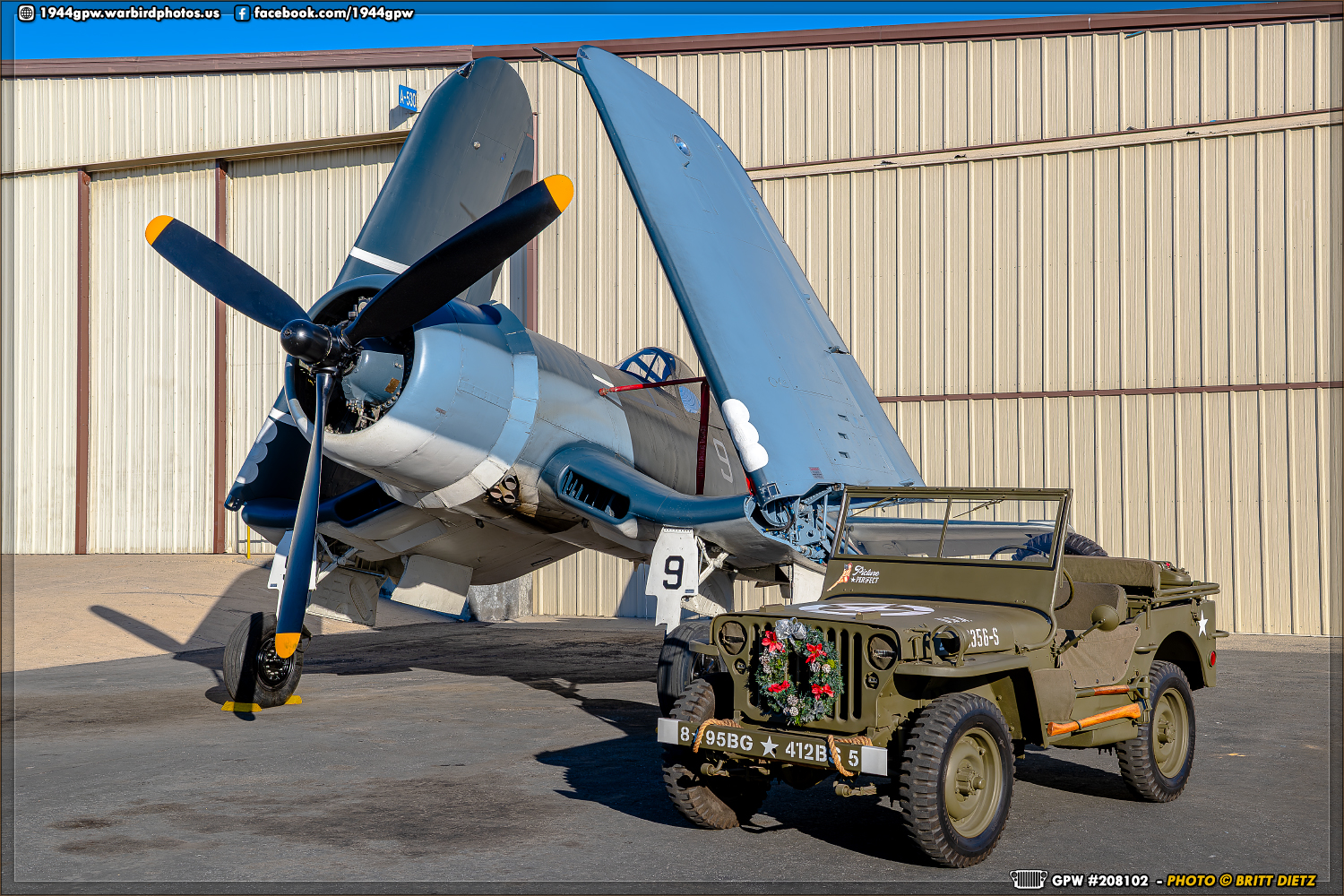
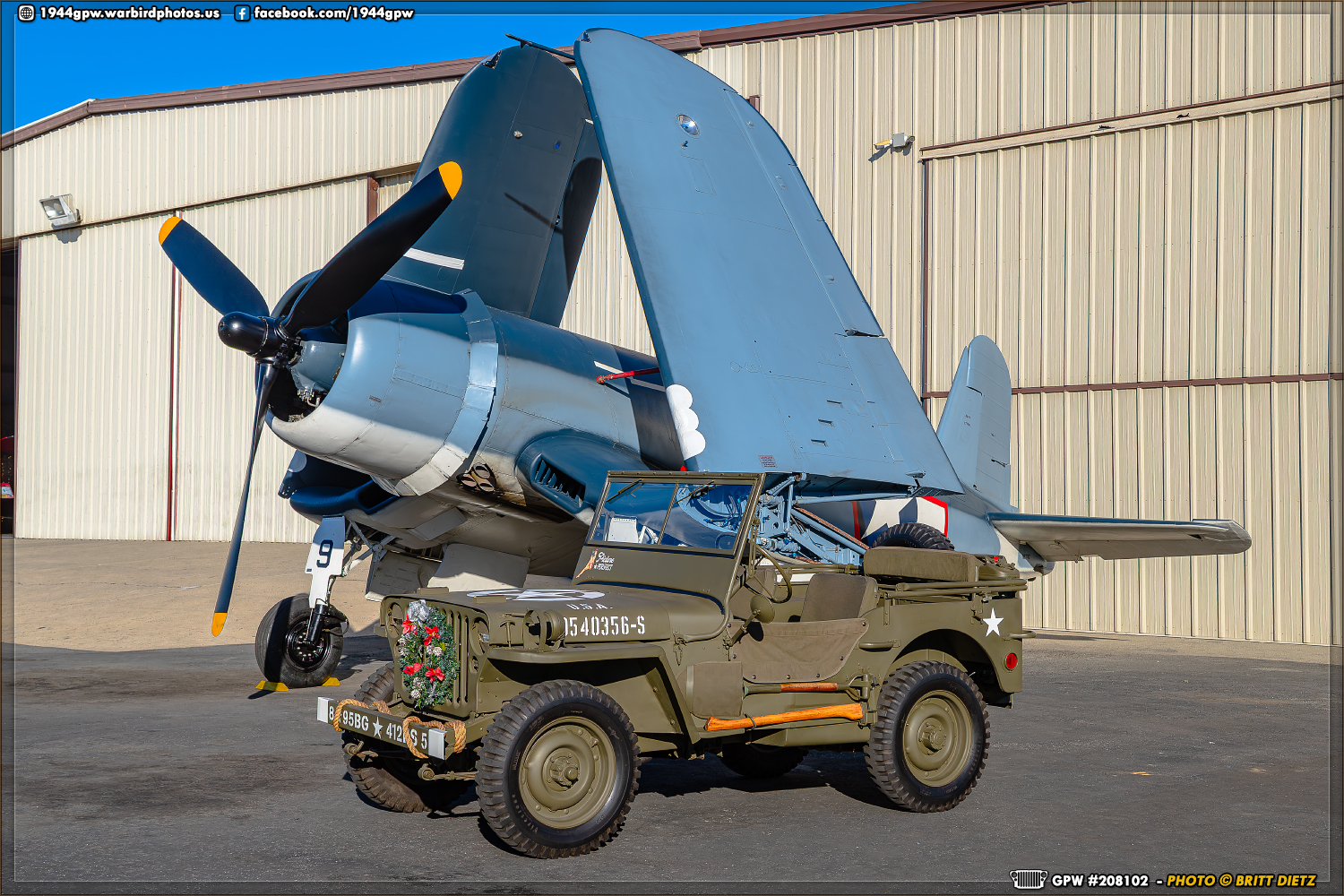
After the event concluded, I took the opportunity to get some shots of my Jeep with the museum’s rare Vought F4U-1A Corsair. This Corsair recently came out of a multi-year complete maintenance redo, including a brand new paint job.
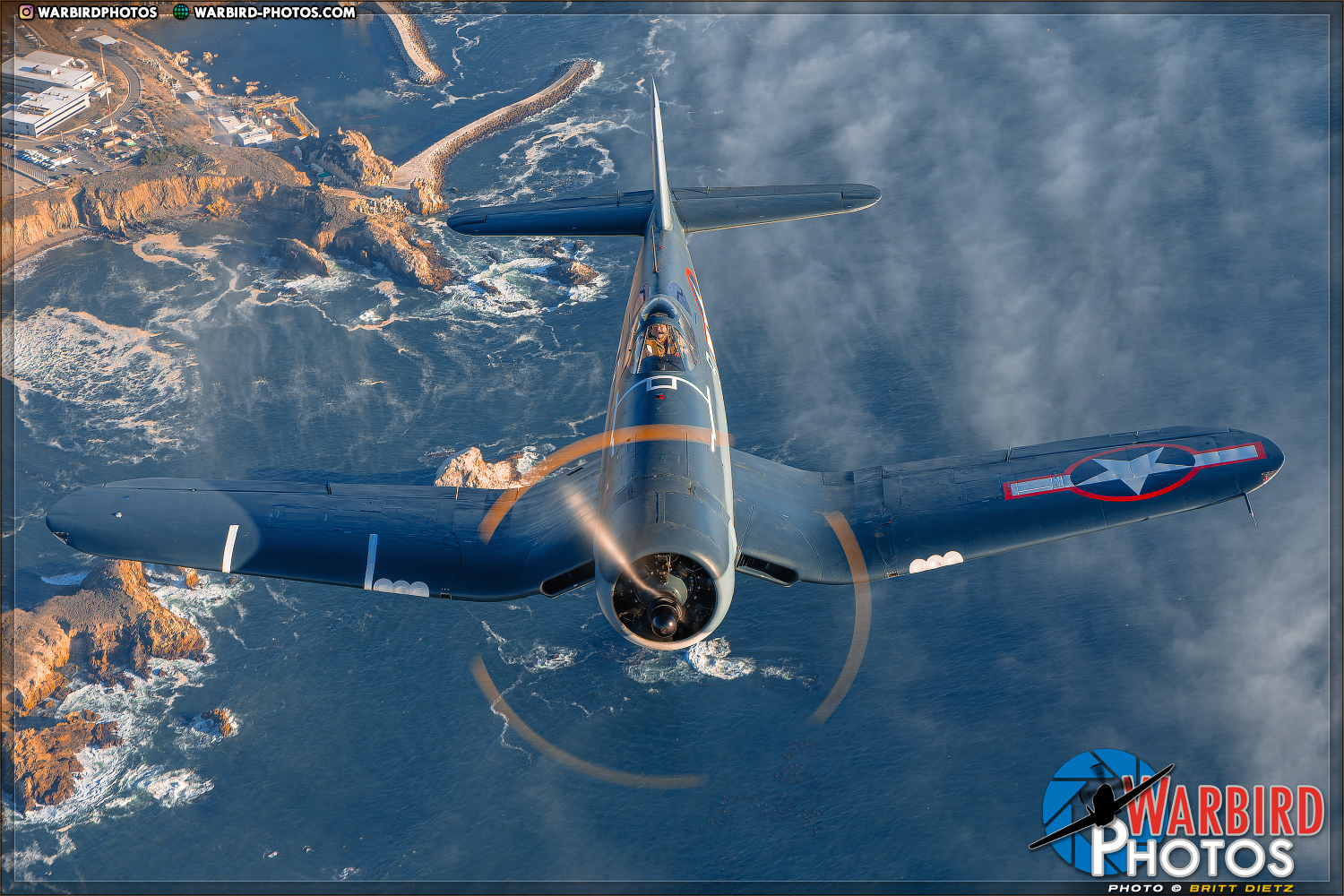
I photographed the Corsair just about a month after her first flight, after the long re-restoration maintenance over Santa Maria, California, with the new paint job. It had been wearing the ‘movie paint’ from when it was used in the Korean War film ‘Devotion’, so it was nice to see it back to a WW2 scheme.
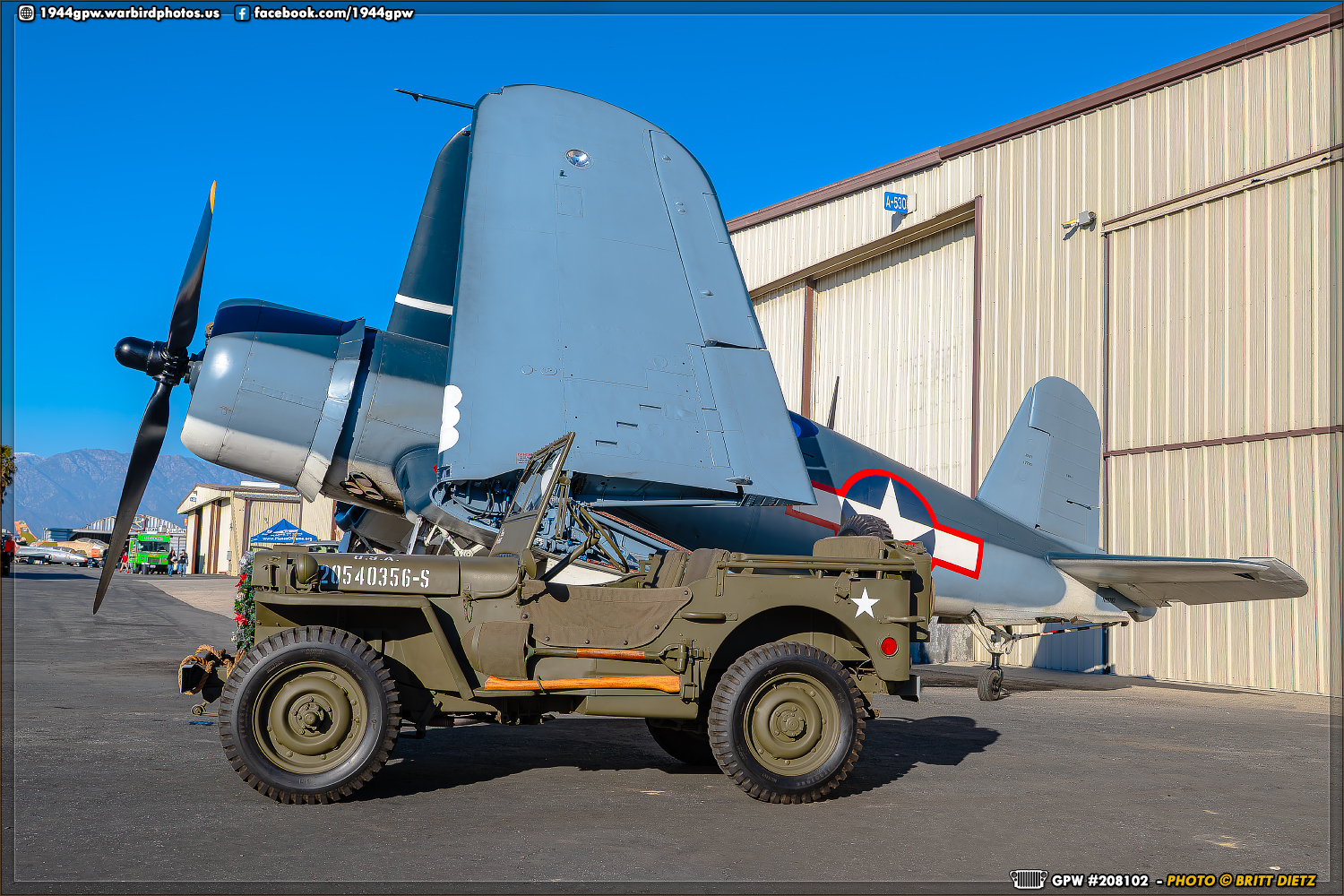
While I’ve photographed my Jeep with this Corsair before in the past, I wanted to get some shots of it with the new scheme. Also, remember that my Jeep served in WW2 with the US Navy, not the Army Air Forces, as it’s currently marked. According to my research, it was quite possibly on Oahu in Hawaii during the war, based on photos of GPW Jeeps serving with the US Navy that have serial numbers just before and after mine.
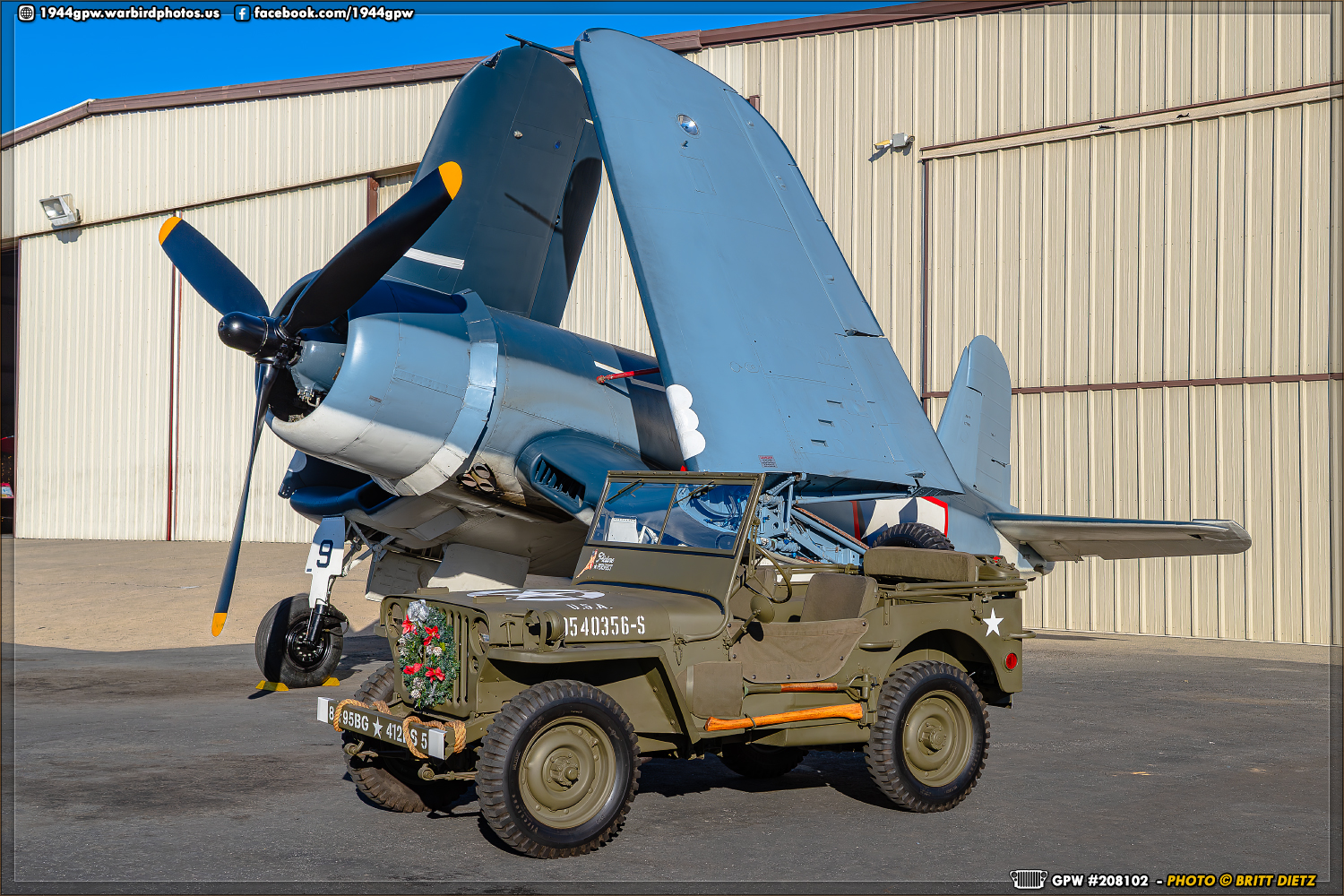
The Museum’s F4U-1A Corsair was built in Stratford, Connecticut, and delivered on August 31, 1943. It’s a genuine WWII combat veteran, flying in the South Pacific during Operation Cartwheel and shared among multiple USMC squadrons—VMF-217 for sure, and likely VMF-213, VMF-214, VMF-215, VMF-216, and others. By summer 1944 it was serving with VMF-441 in the Central Pacific. After the war it returned stateside, spent time as a prop at MGM Studios, and even appeared in Baa Baa Black Sheep. The Museum acquired it in 1970 and restored it in 1975, and it remains one of the oldest Corsairs still flying today.
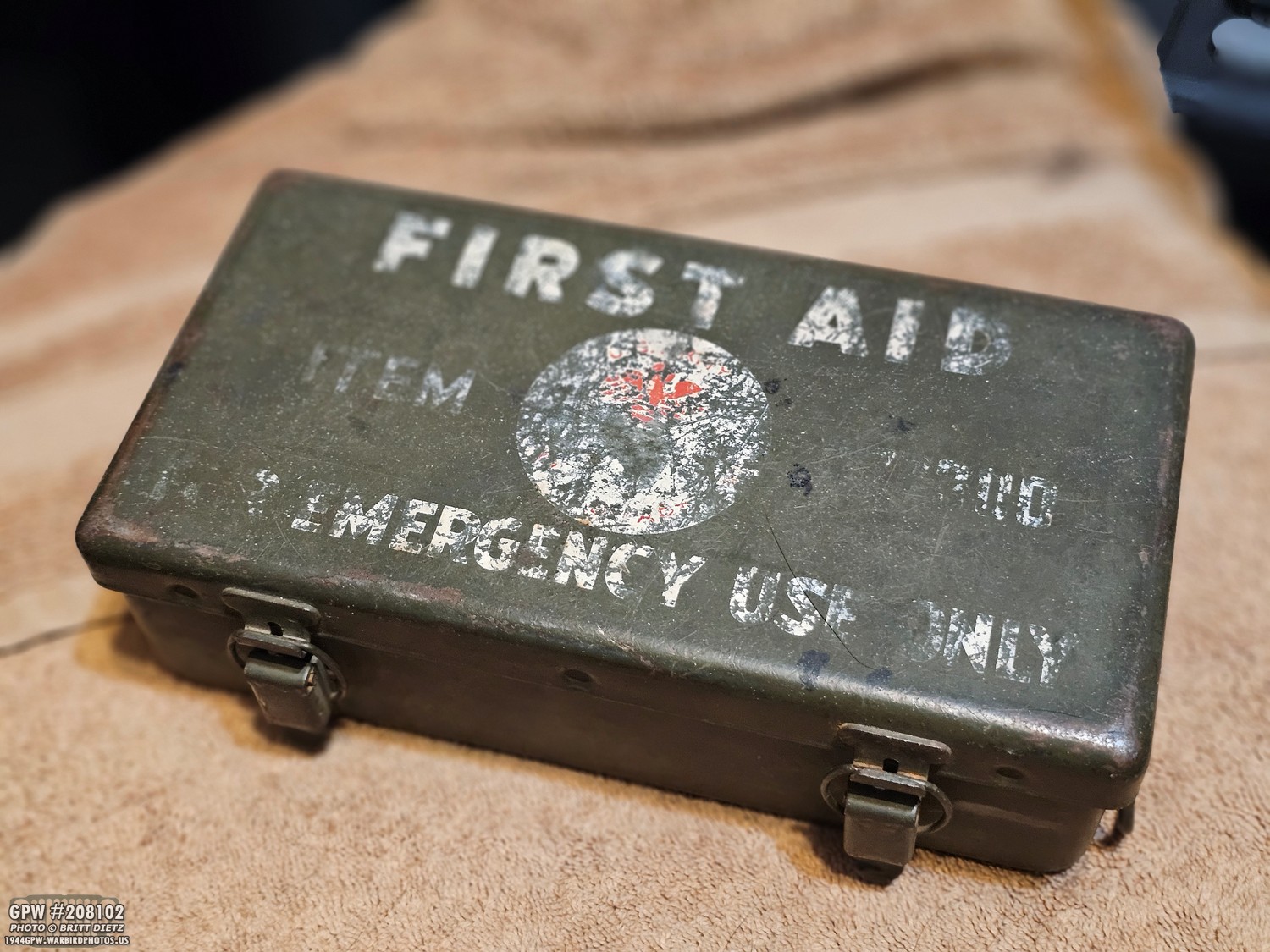
Moving on! On my quest to assemble a complete WW2 Jeep First Aid kit, I finally was able to not only complete one but also find an interesting difference between early and late kits. It’s widely known that the 3777300 kit is the correct wartime one, with the 9-221-200 kits signaling post-war. I spotted this 3777300 (the number is hard to read) and snatched it up late one night while checking out eBay!
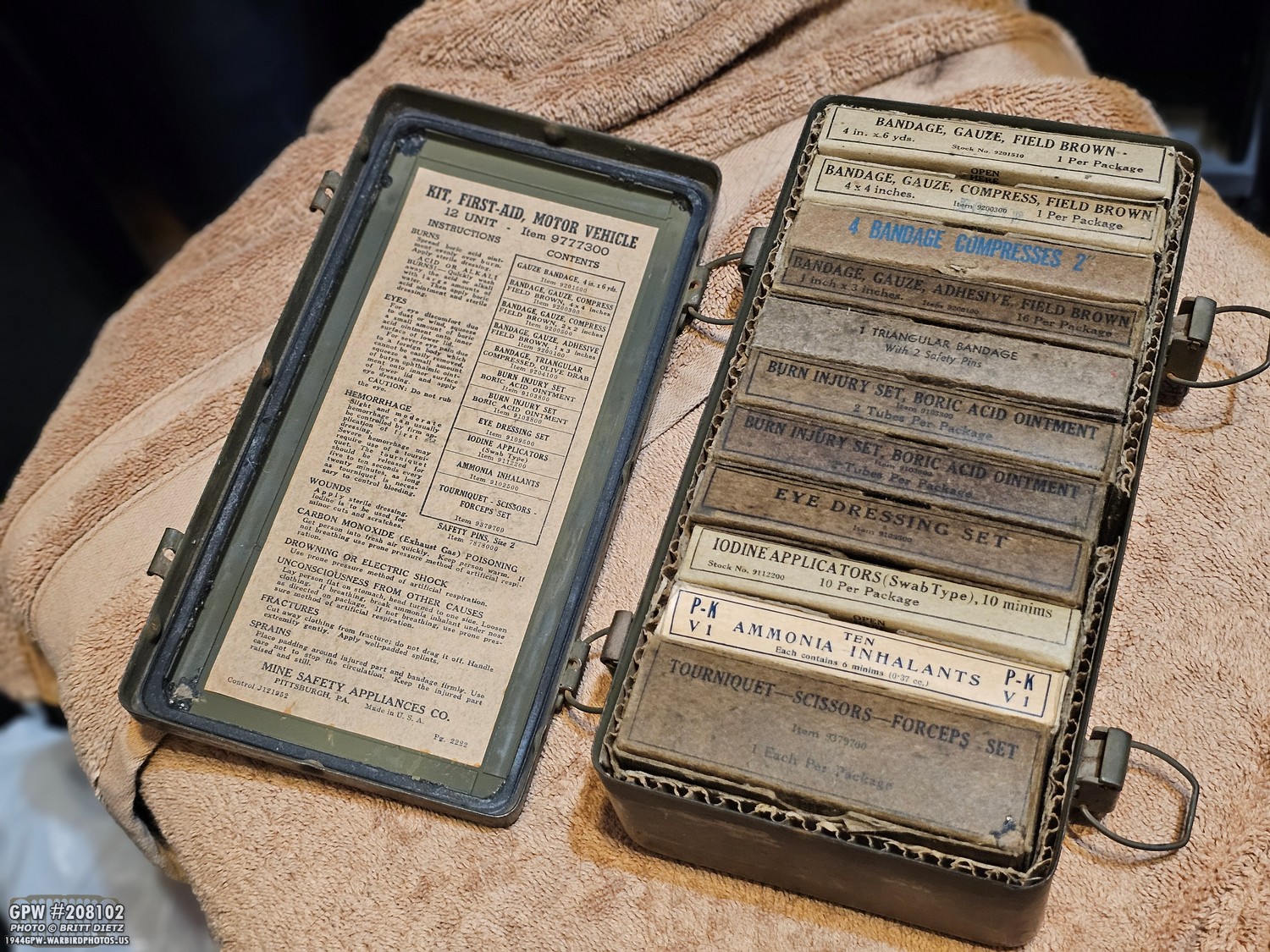
This one was nearly complete! It had two wrong boxes (from another kit maker), but I (thankfully) had the correct two boxes from another kit I had that was incomplete! The one included the inner cardboard liner, which is missing from most of them as well!
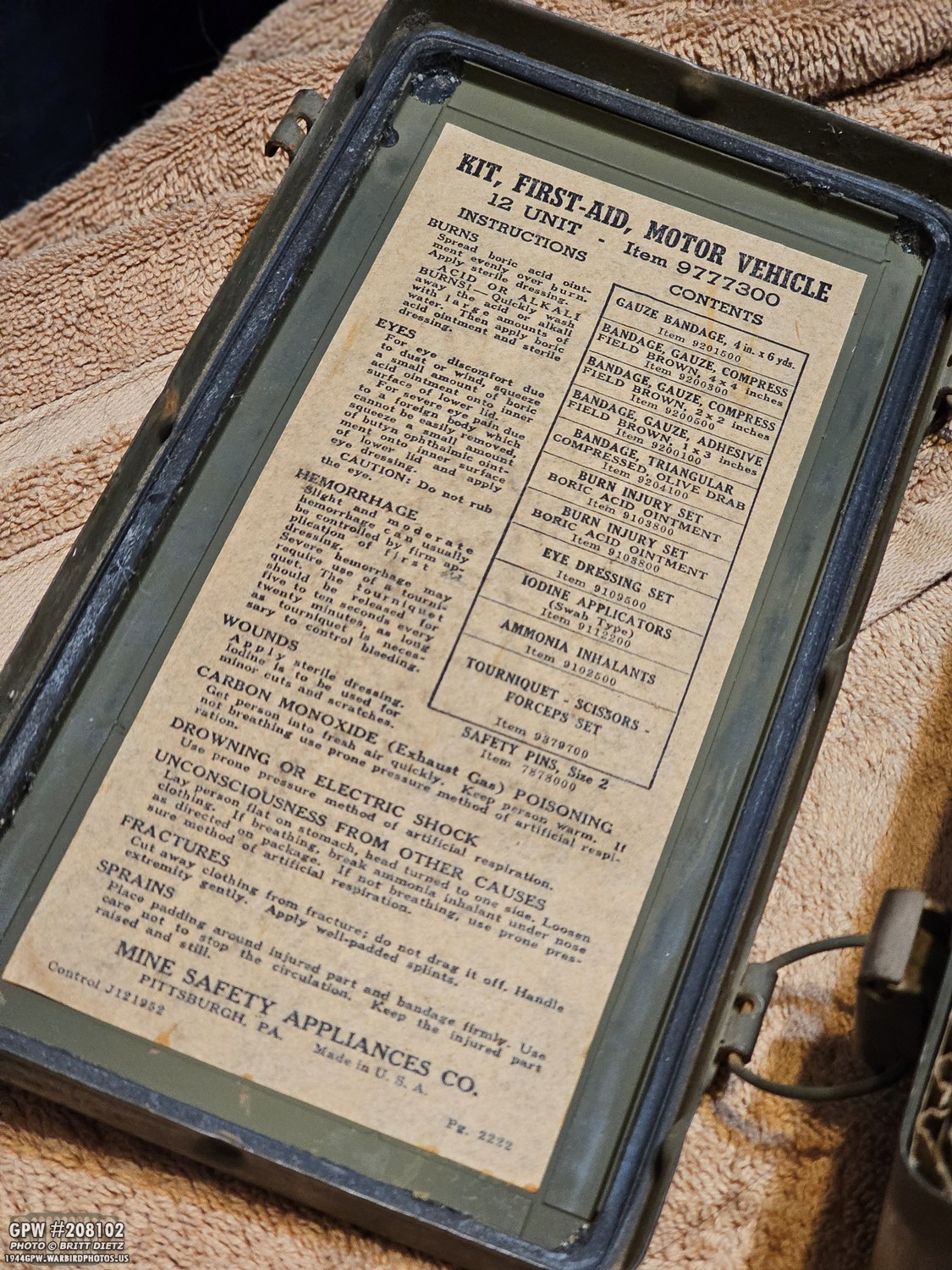
It has the original instructions and inventory sticker still inside along with the weather seal. All in really good shape. Really, the only negative thing was the wear on the front of the case.
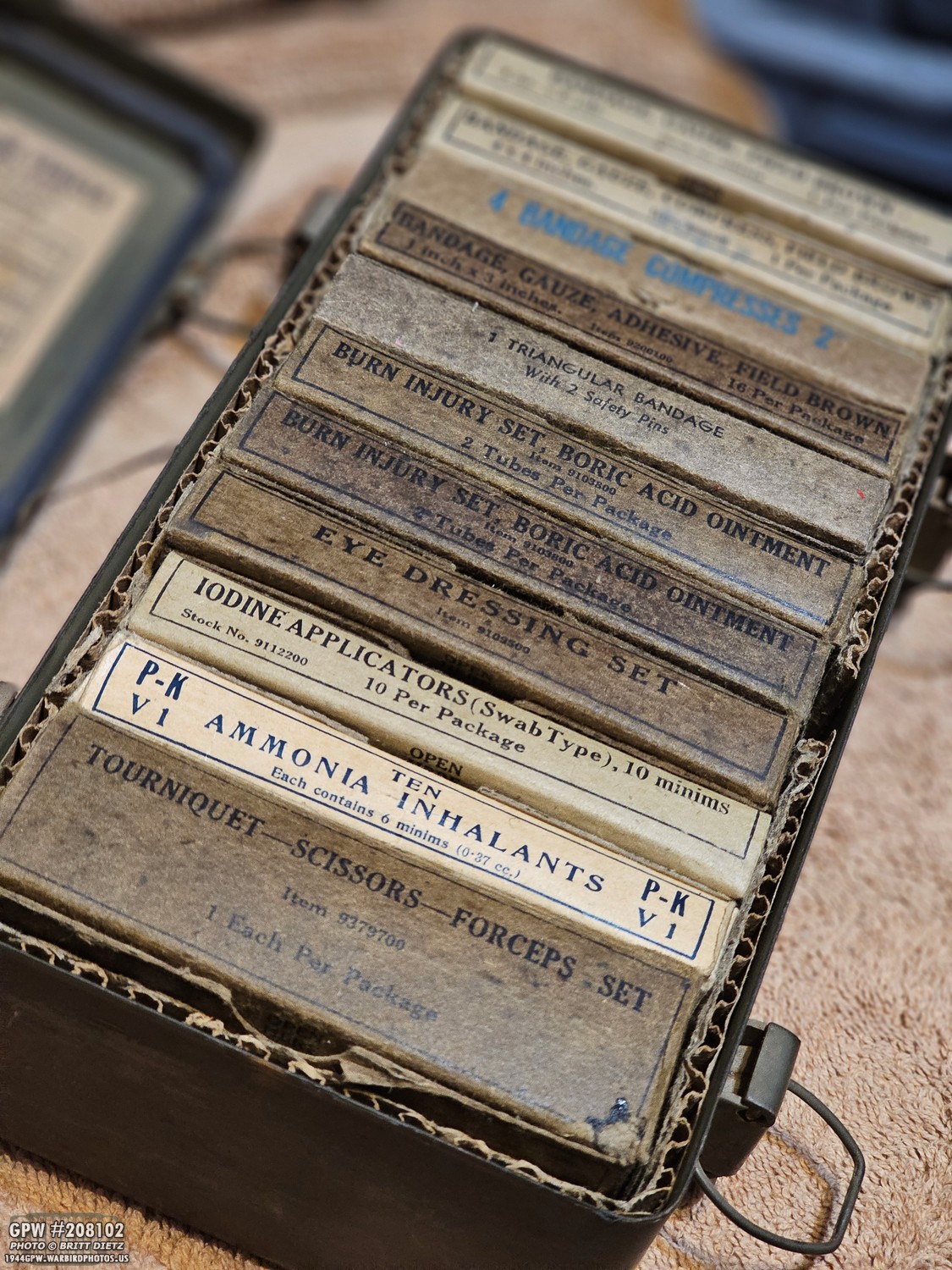
Typically, I find that a lot of these kits are missing the tourniquet/scissors/forceps box, the boric acid ointments, and the ammonia inhalants. But my kit now has all the correct boxes for the Mine Safety Appliances version, and each box has its original contents!
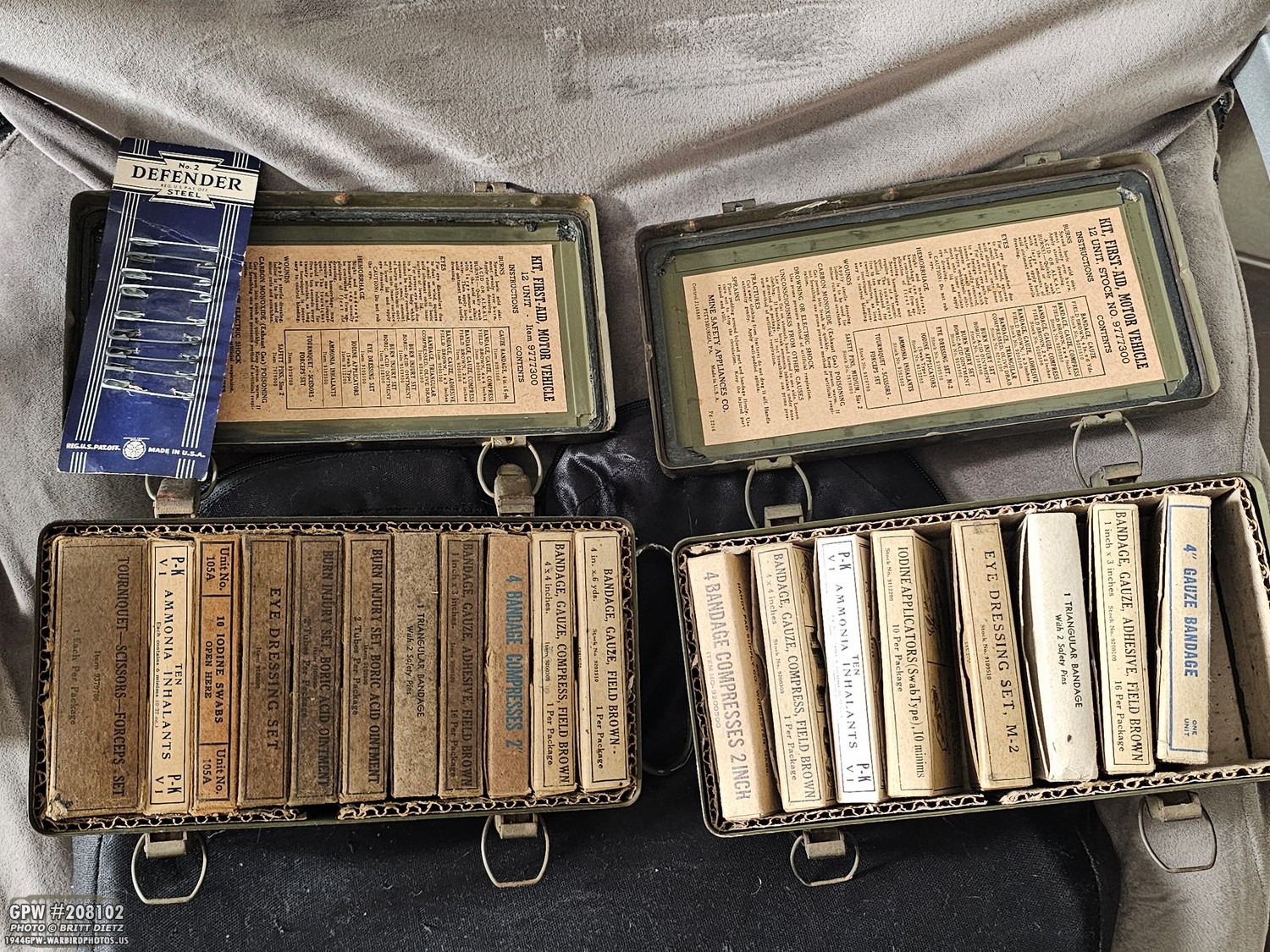
That includes the also impossible-to-find Defender No. 2 safety pins. On the left is the final complete kit with everything there. On the right was the wartime 3777300 kit that I had, which was missing several boxes. It had the cardboard liner as well. The incorrect ones that were in the left one are now in the right. I’m not going to try and make two complete sets, but I did discover something interesting when I was comparing the two sets….
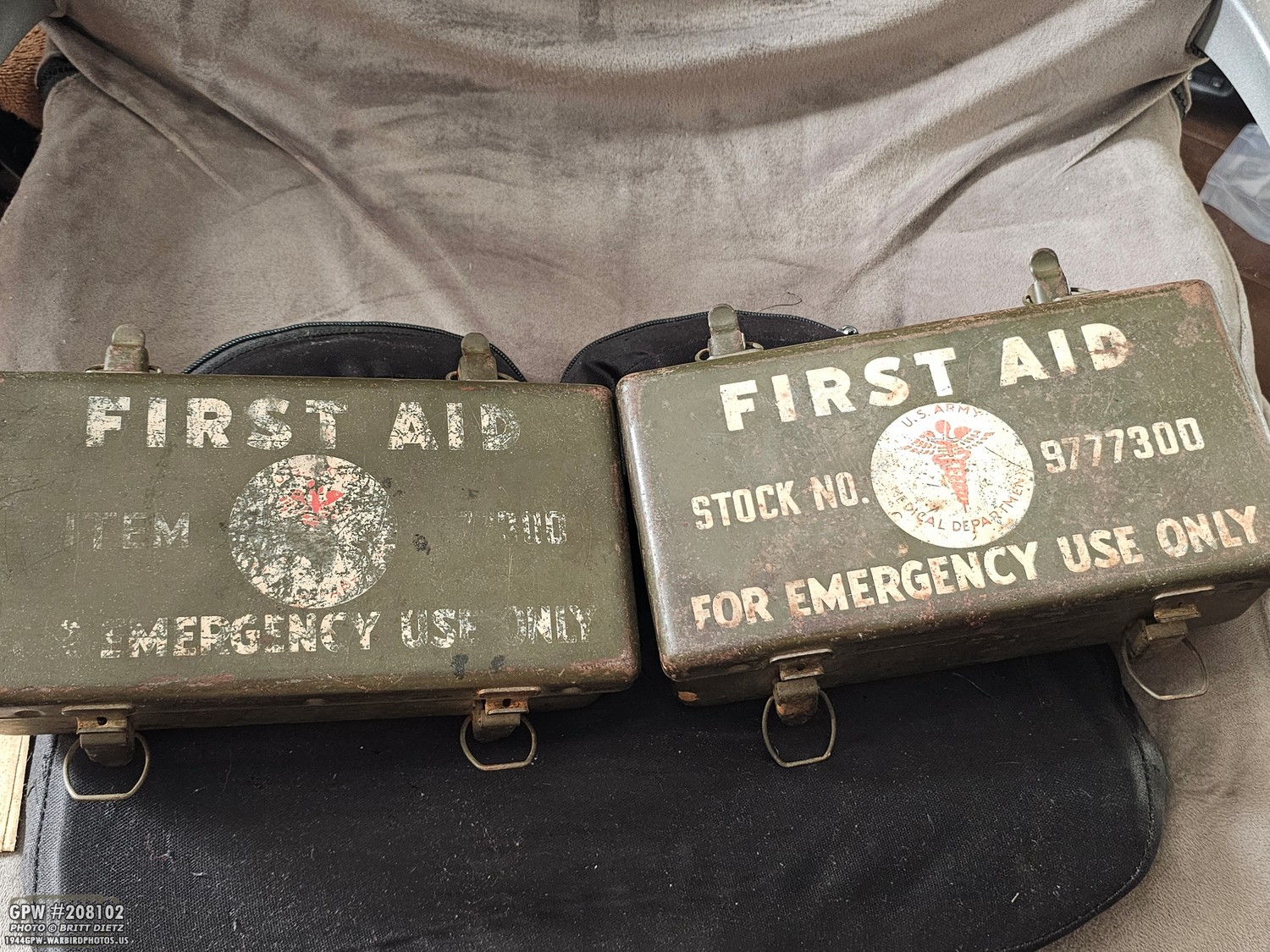
Notice, the one on the left says ITEM 3777300, and the one on the right says STOCK NO. 3777300. Both are Mine Safety Appliances made, so I wanted to know what the difference between the two meant. Well, turns out, the ITEM one (the new one) was made through early 1944 when they switched to STOCK No, which lasted until 1946 when they changed things to the post-war 9-221-200 version. Pretty cool to have both wartime versions without even knowing it! The earlier one would probably be more correct for my Jeep, since my Jeep is from June of 1944, so the complete kit is the one that’ll go in the Jeep! I am still debating if I’m going to install the first aid kit holder behind the dash like it was on some Jeeps.
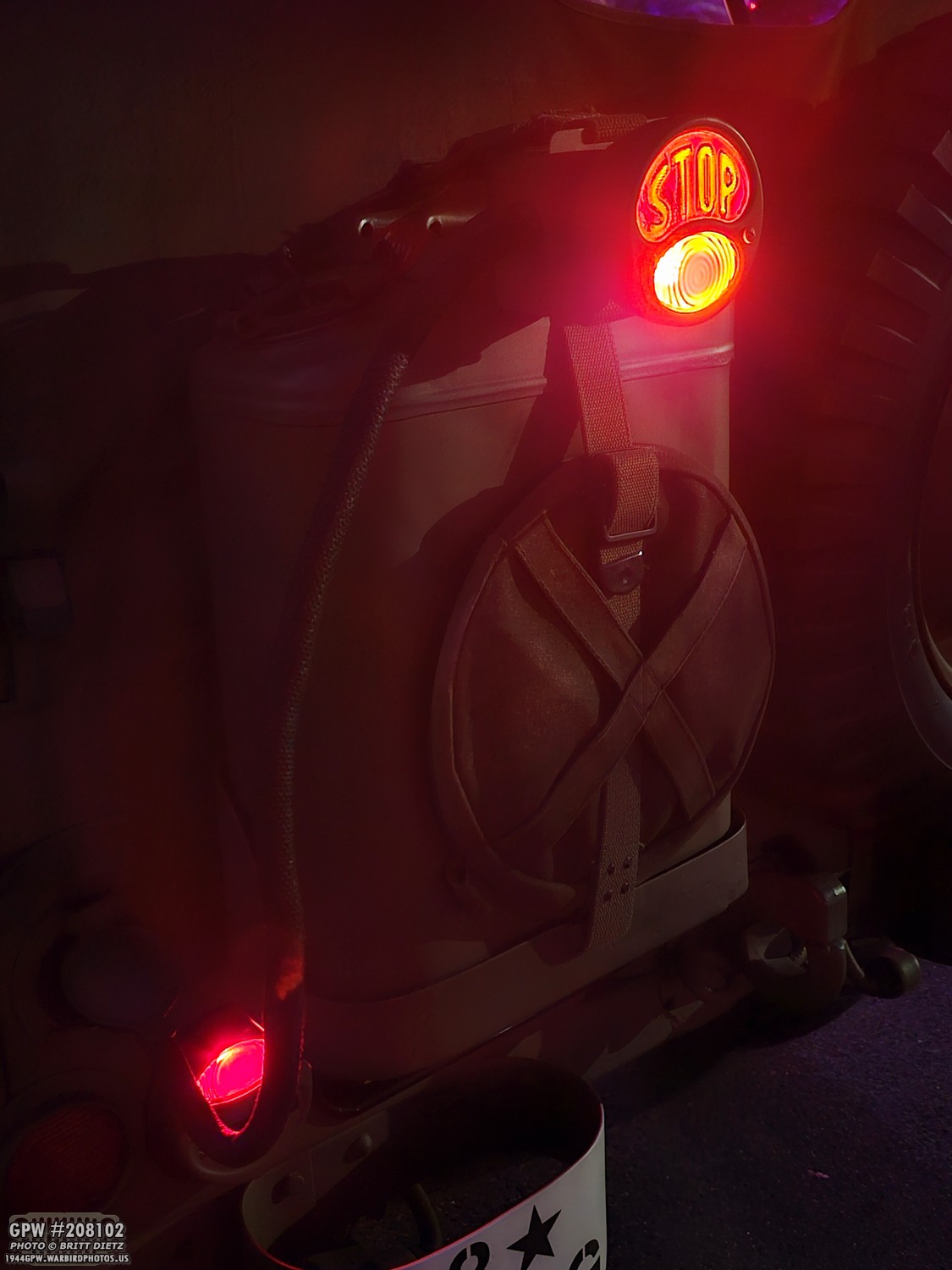
As some of you might know, I’m writing Jeep articles for the Military Vehicle Preservation Association (MVPA) and their History in Motion magazine. I did an article not too long with a DIY look at my trailer socket stop light for nighttime driving. One person recreated it (and sent me photos of the end result), which makes me glad I was able to inspire others to do the process. It’s a cheap and easy way, without modifying ANYTHING on the Jeep, to have better visibility in nighttime driving. Plus, it’s easy to pop it off and put it in the toolbox when at shows! Here’s a nighttime look at it in action.
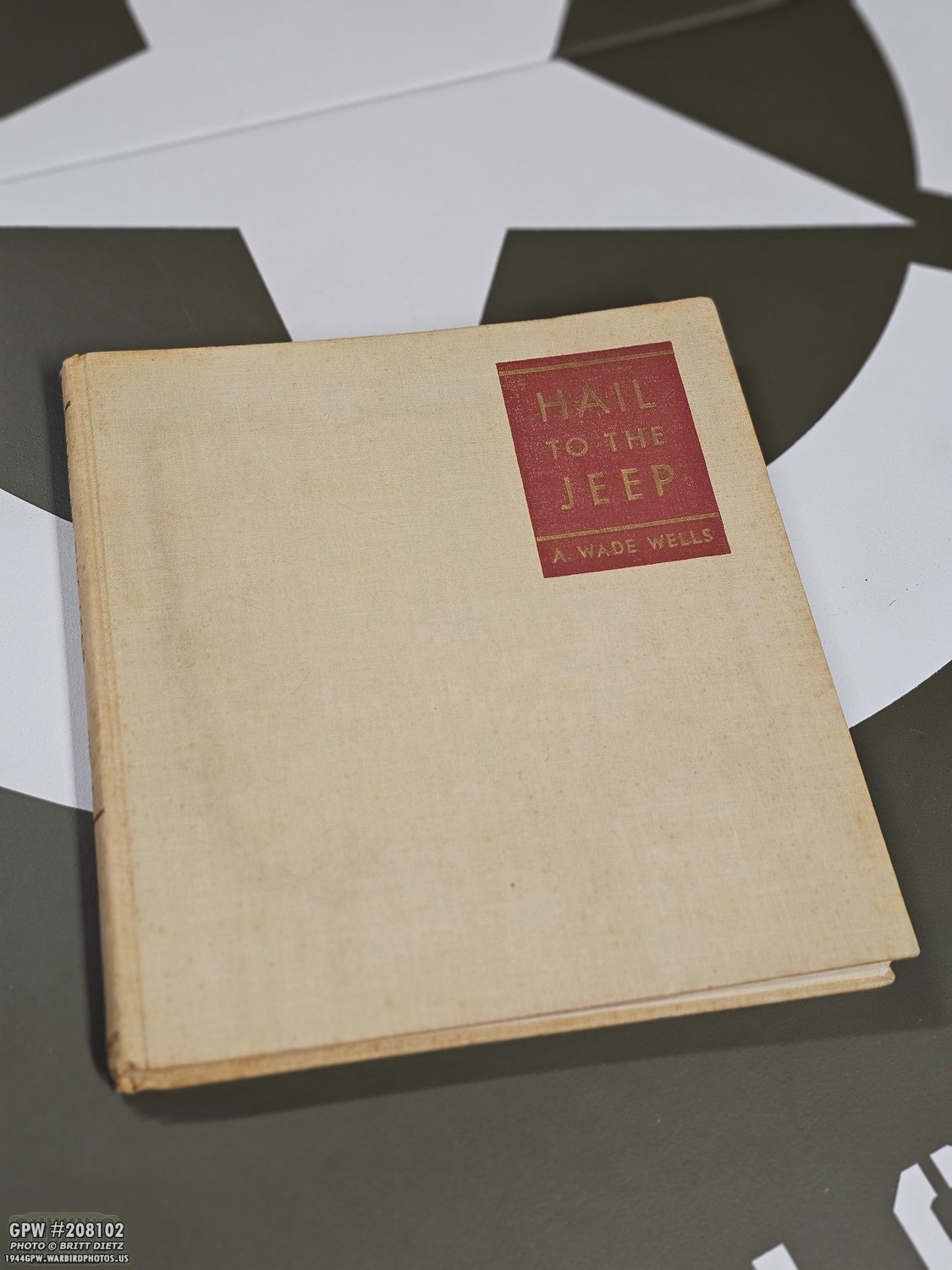
Another fun eBay find recently, late at night, was this really awesome Jeep book, ‘Hail to the Jeep’ by A. Wade Wells. This is an original 1946 printing of the book, though it’s missing the book cover jacket. Doing research online, it was reprinted sometime afterwards and sold on a few military vehicle online stores (with a different cover), but is sold out everywhere. It’s cool to have an original, and an original with a cool story…
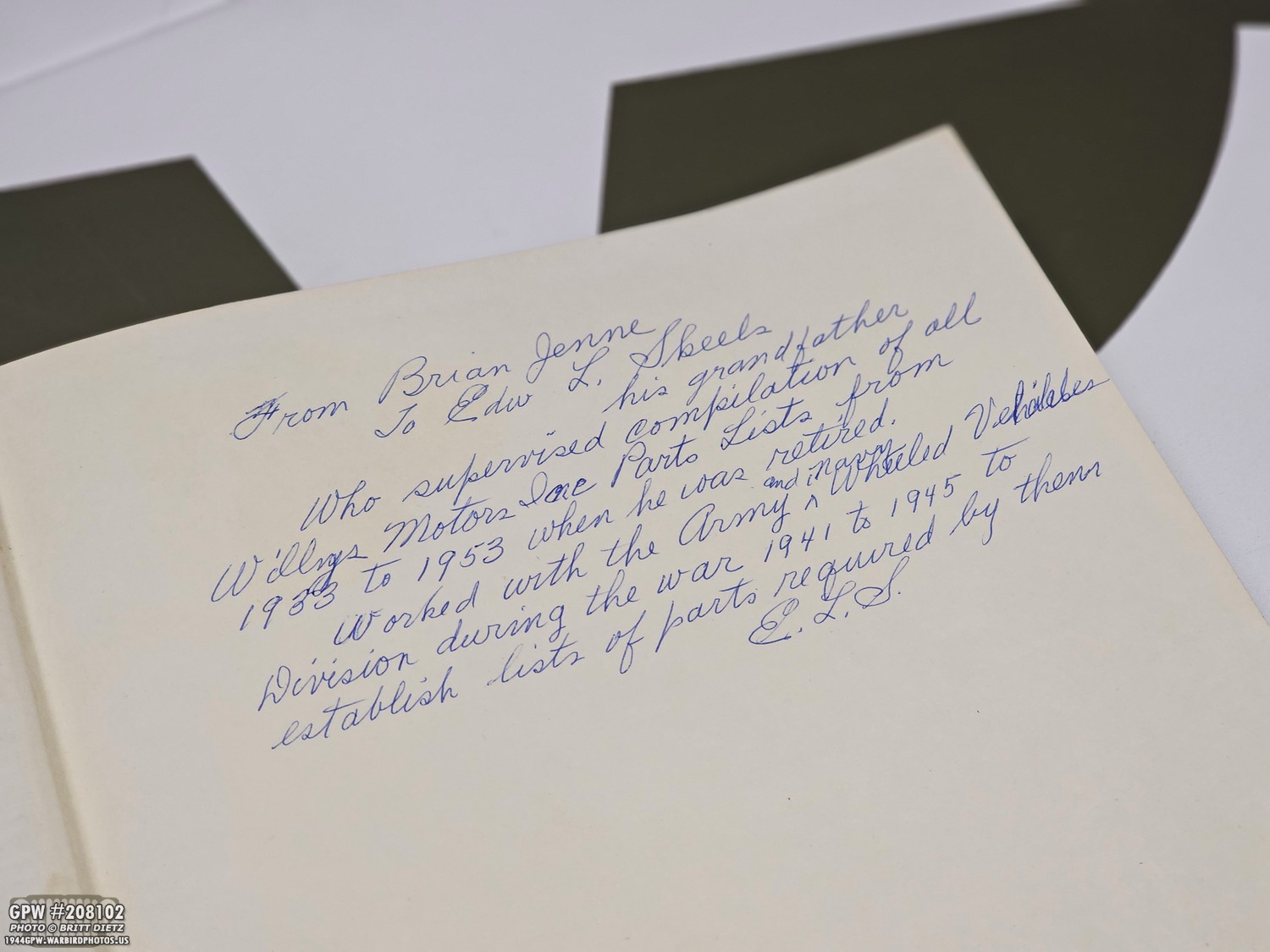
Before I get into the book, I have to show the incredible message written inside. It appears to be written by a Edward L Skeels as a provenance note about where the book came from. It’s from his grandson Brian Jerne, given to Edward who “Who supervised compilation of all Willys Motors Inc Parts Lists from 1933 to 1953 when he was retired. Worked with the Army and, Navy Wheeled Vehicles Division during the war 1941 to 1945 to establish lists of parts required by them.” That’s really cool to have, knowing it belonged to someone who basically played a major role in creating the ORD 9 part manuals for the Jeep!
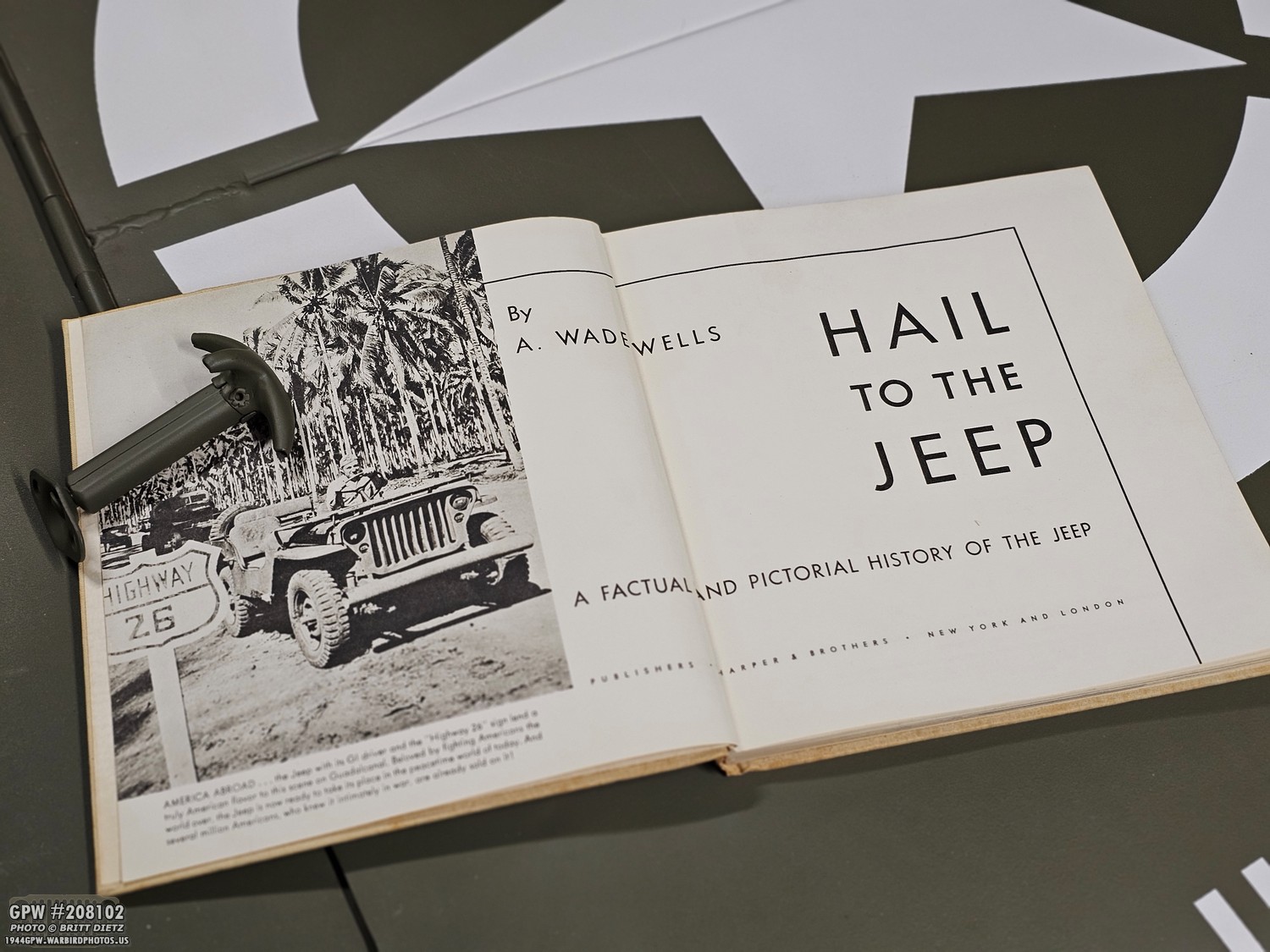
The book has some pretty incredible jeep photos in it, 80% of them I’ve never seen.
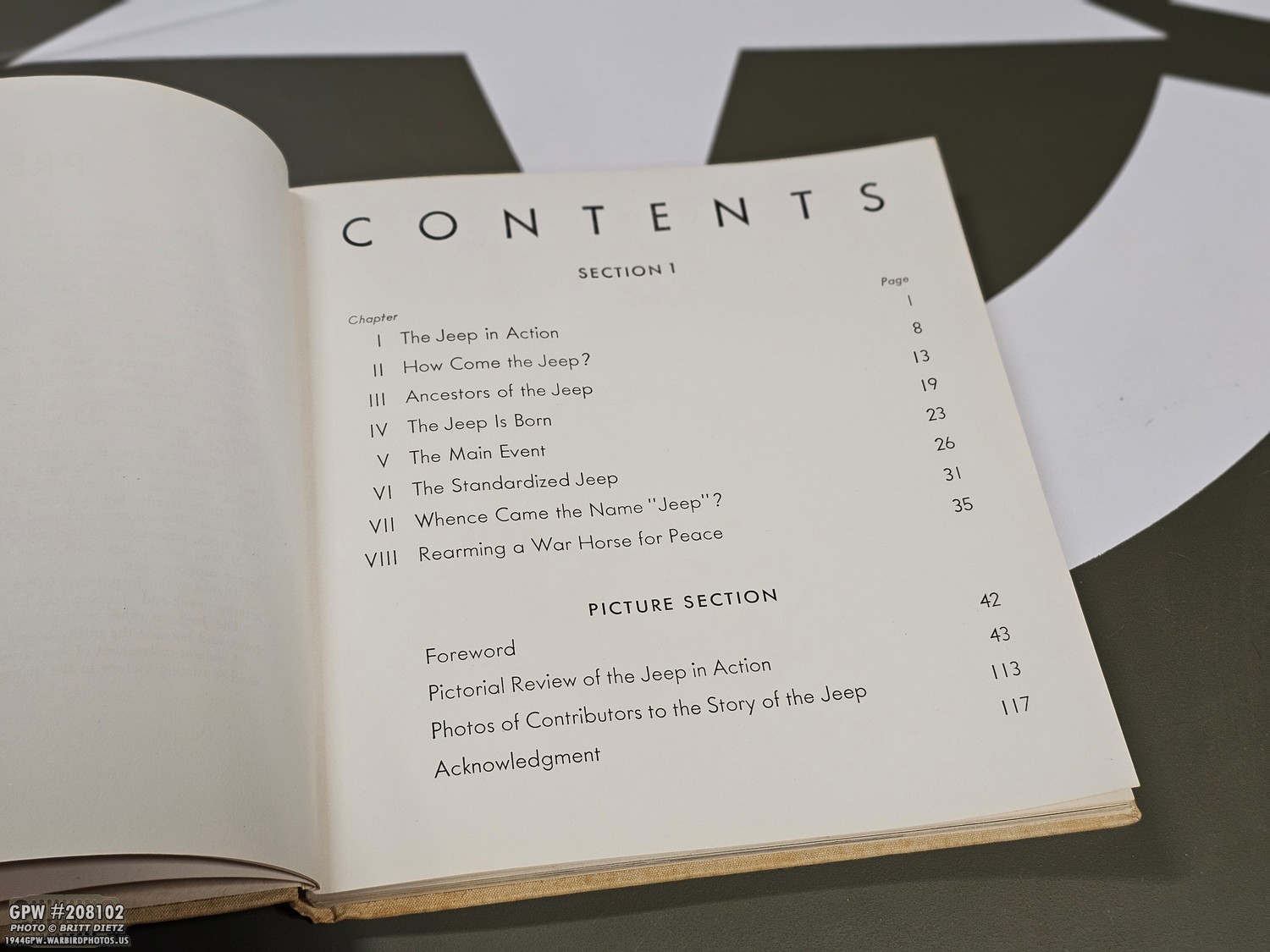
Not only is it full of photos, but the first quarter of the book is a great in-depth text look at the history of the Jeep from inception to production.
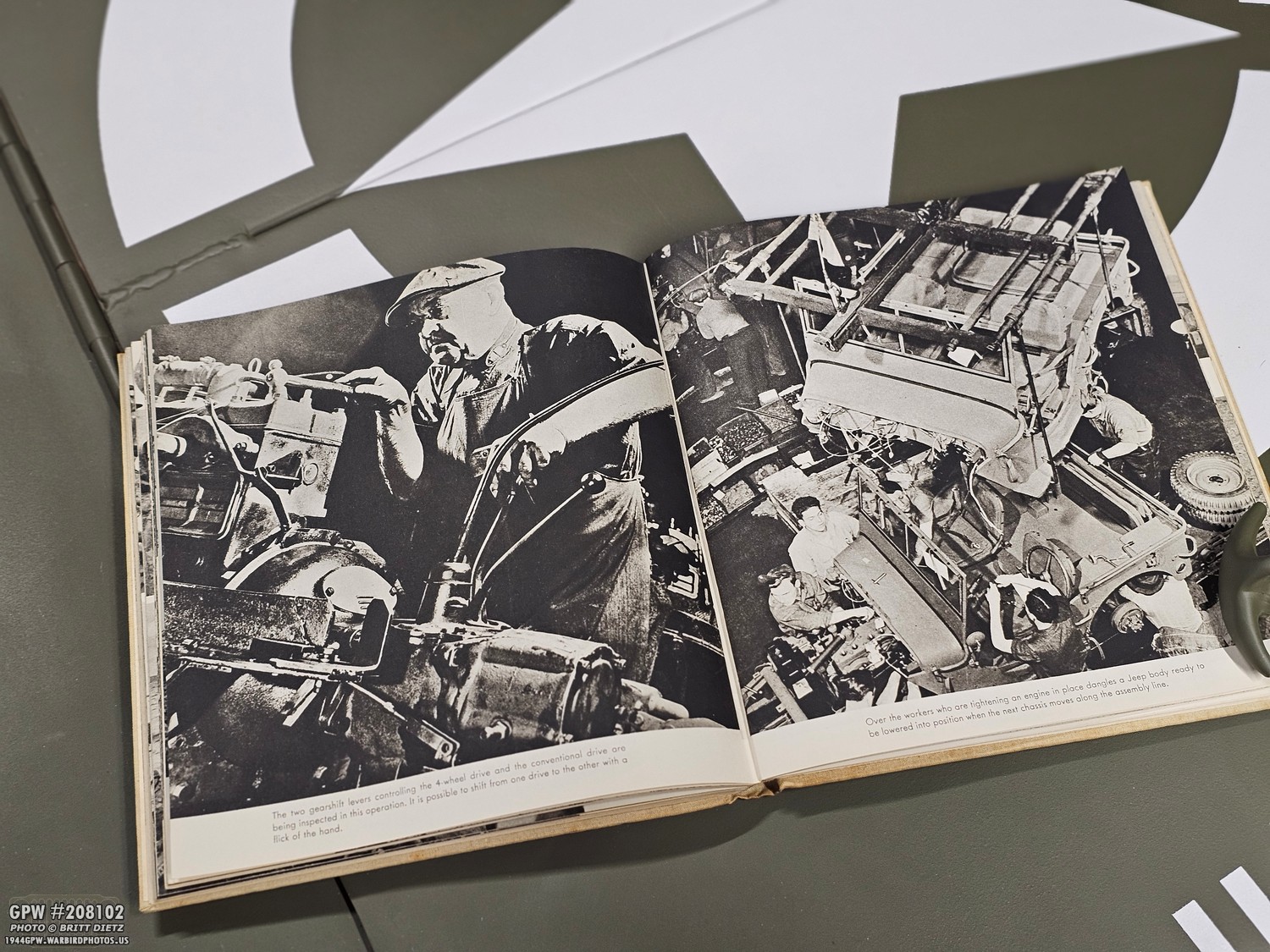
The photos in it are pretty amazing, with some great details. All of the factory photos appear to be Willys MB Jeeps, no Ford GPWs sadly.
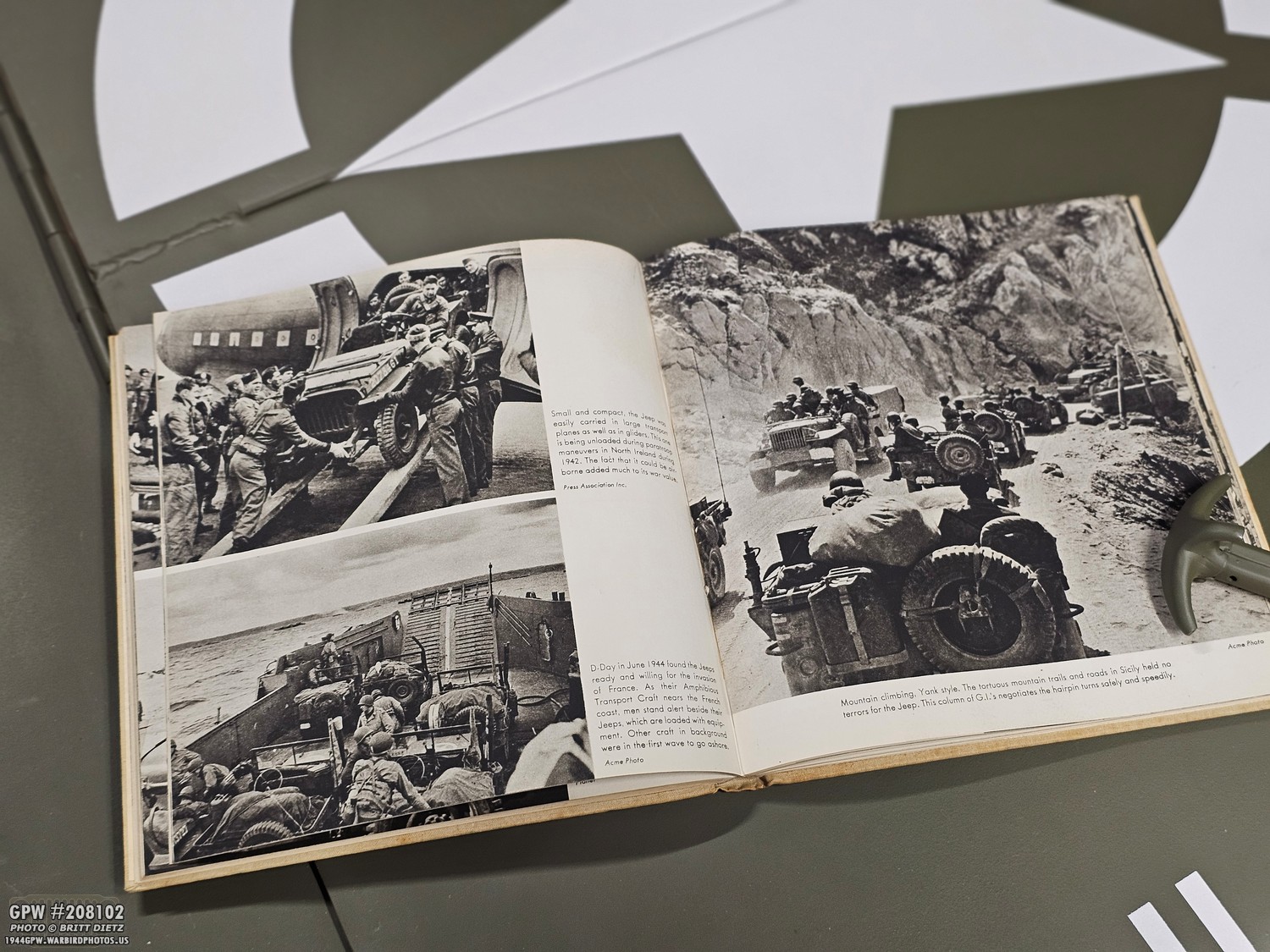
There are many many shots of Jeeps in combat service. Always fun to see the various modifications in the field on Jeeps.
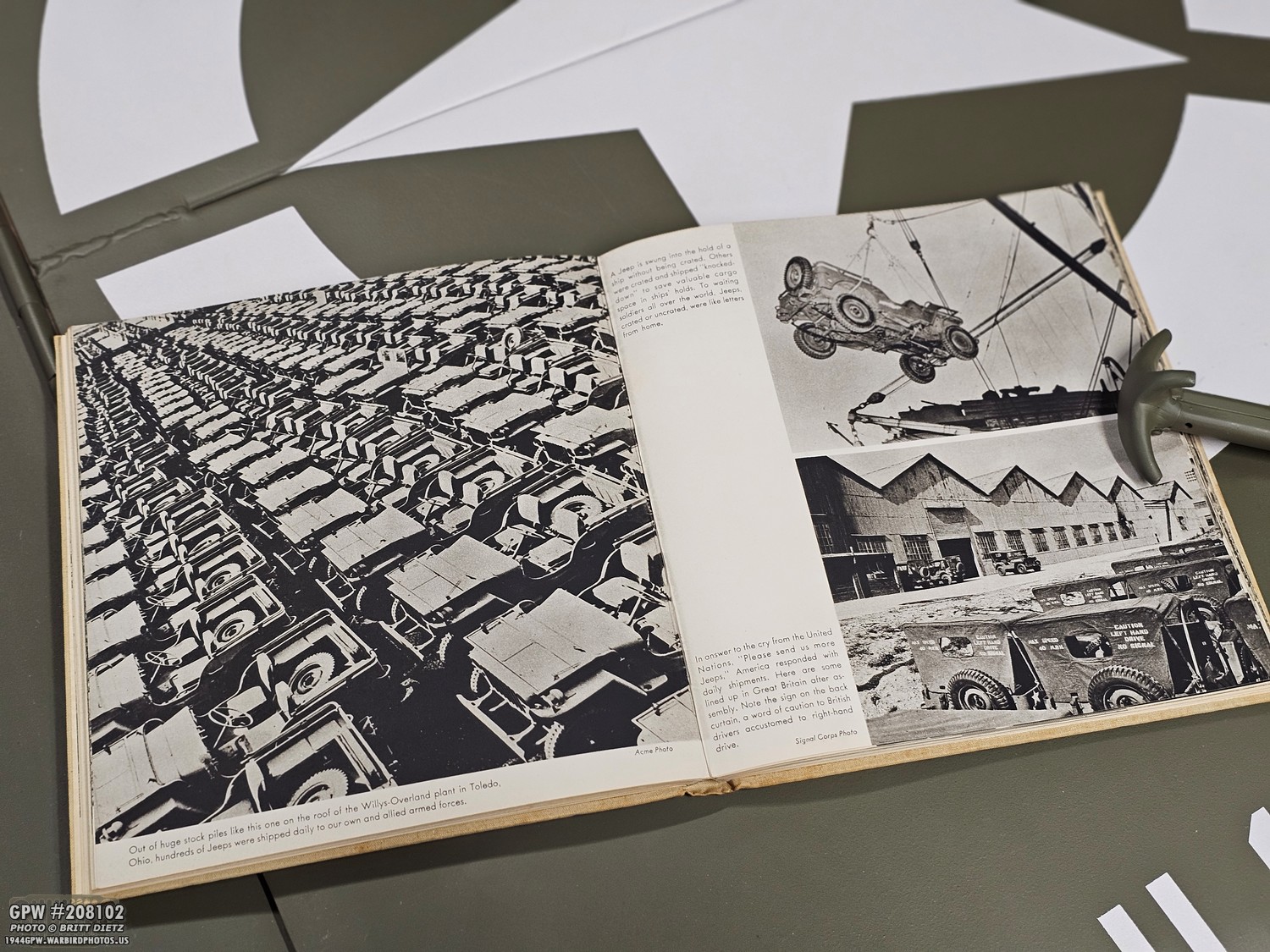
Since I got my Jeep, I’ve been collecting various Jeep books and have a small library of them now. They are all great references for how Jeeps should have looked from shipping…

…to being out in the field.
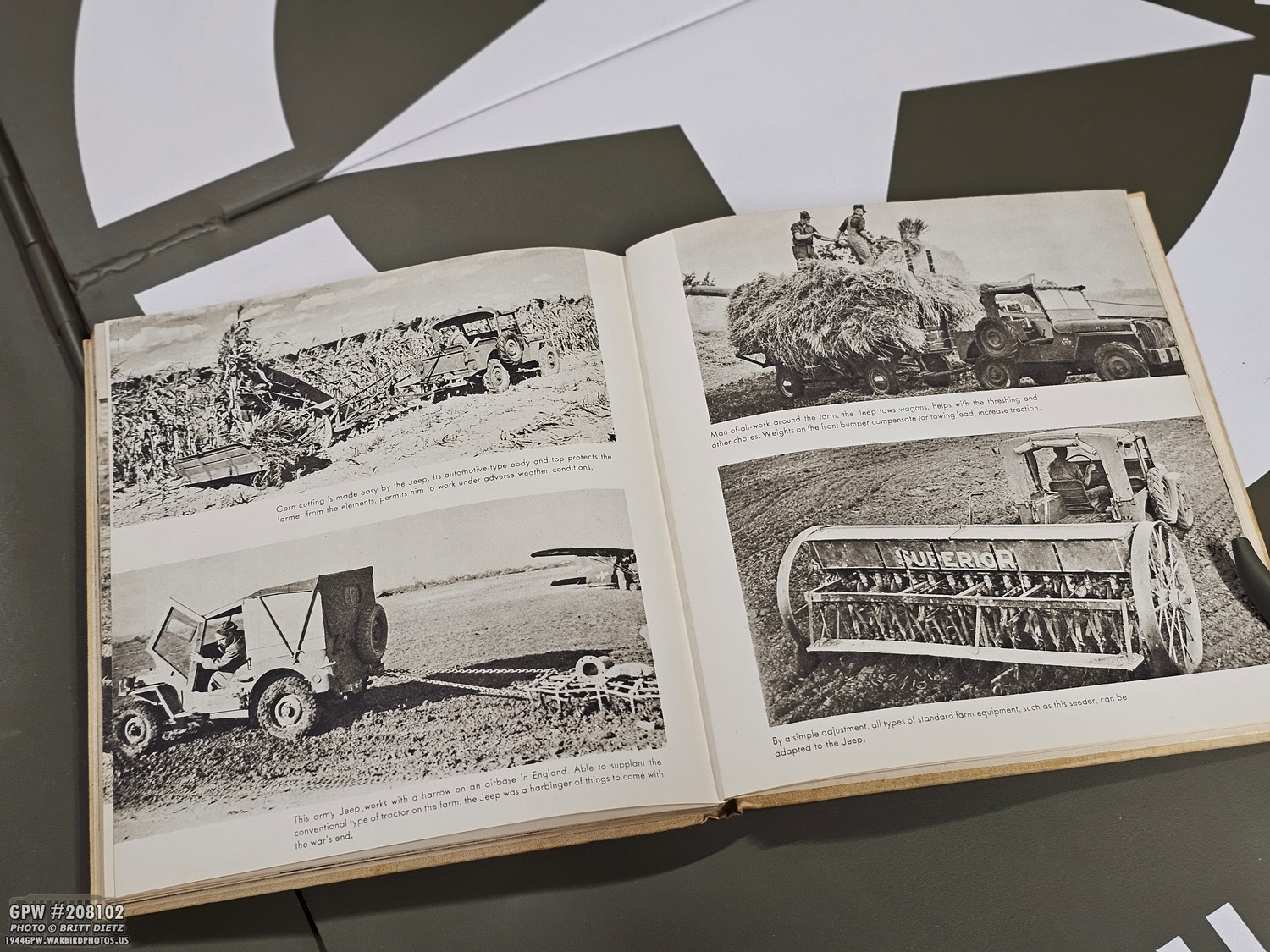
And there’s a nice section at the end showing wartime Jeeps being used post-war for farm duties. Some of them are post-war CJ Civilian Jeeps.
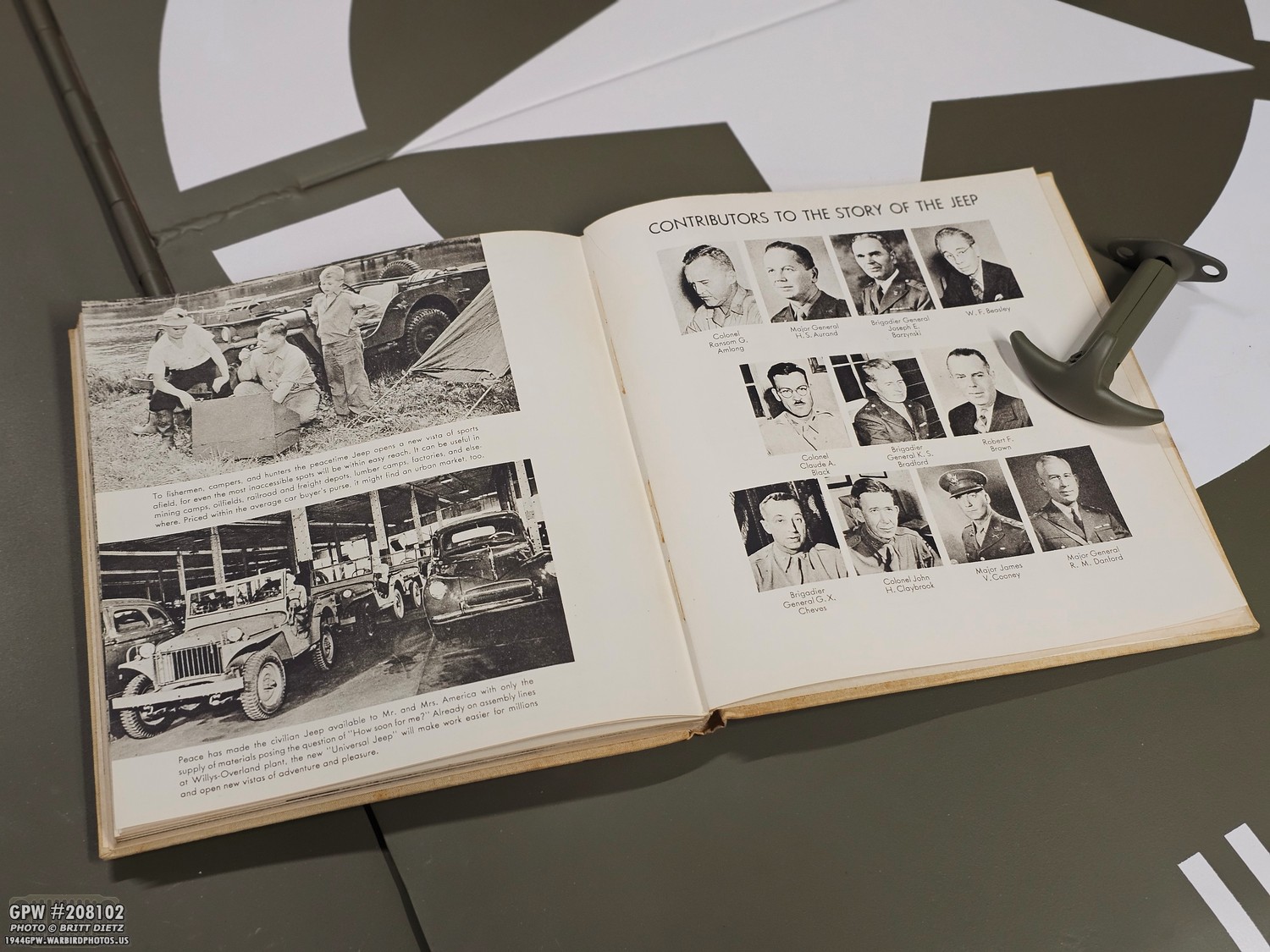
And the book concludes with a section of all the people in the military who were a part of the book (and probably the actual development of the Jeep). Overall, a cool piece of history to have in the ever-growing Jeep library!
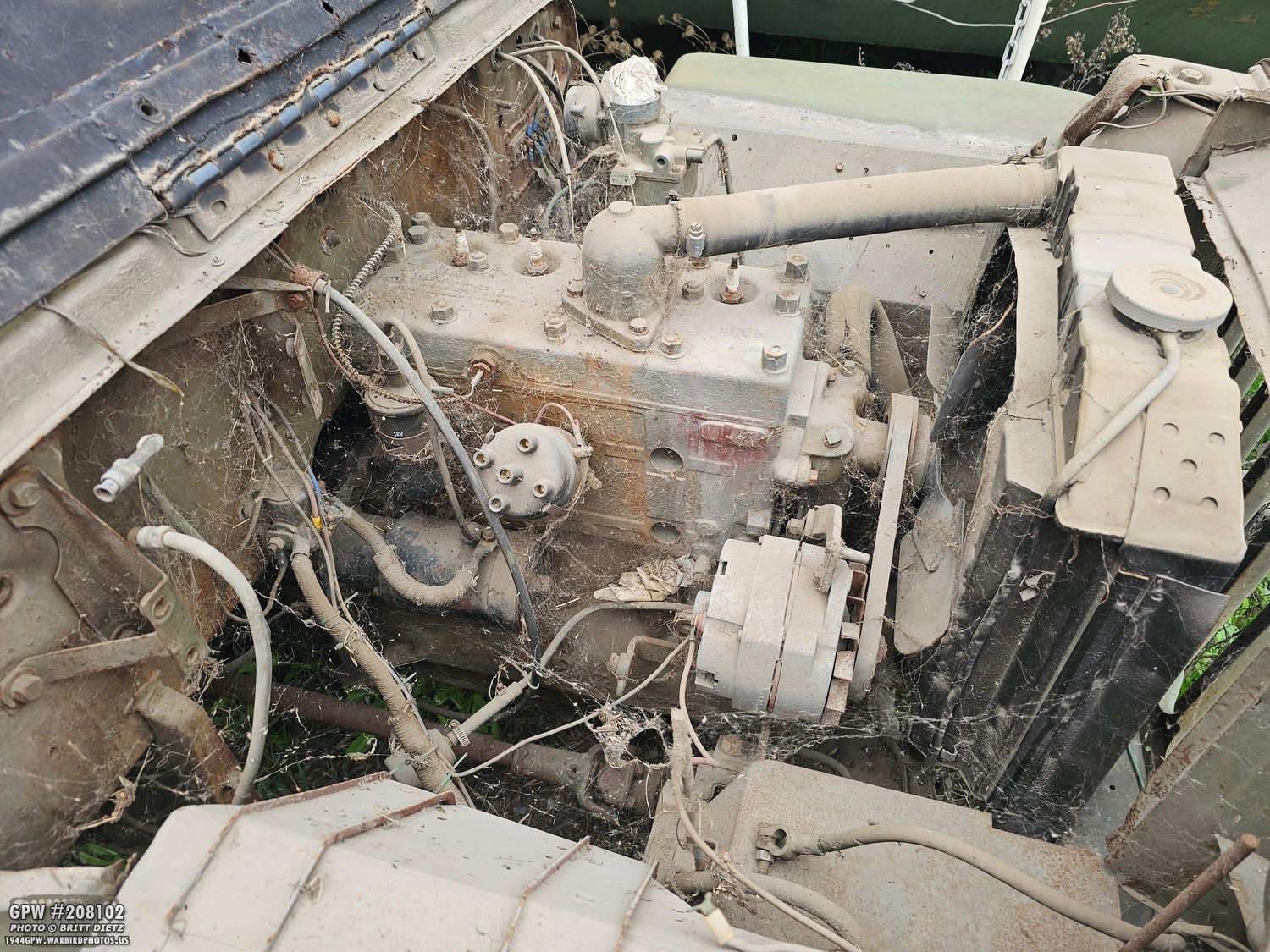
And that’s it for this short update. I leave you with a look at another Jeep that’s at the Planes of Fame Air Museum. This one, sadly, sits all day outside in the weeds, so it’s become quite the eco nest for daddy long-leg spiders. I should note that I’ve featured this Jeep before in the past when the owner brought it over to my house to do some preventative rust work on it… which is one of the only reasons it hasn’t rotted away. I’ve ever restored several of the items that go on this Jeep here in the engine bay, but they are still in my garage until the future of this Jeep can be decided. And moreover, this was the first Jeep I ever got to drive! Let’s hope this Jeep sees a better future.
Till the next update…
Till the next update…